

Pet waste isn’t just an eyesore – it’s a health hazard and a threat to local water quality. A single dog can produce 274 pounds of waste annually, and even a small amount can contain millions of harmful bacteria. When left unmanaged, this waste pollutes waterways, spreads diseases, and creates tension among neighbors.
Key Takeaways:
- Health Risks: Pet waste carries up to 65 diseases, including salmonella and E. coli, and can attract pests.
- Environmental Impact: Dog waste contributes 20%-30% of bacterial contamination in urban watersheds, harming aquatic life and water quality.
- Community Issues: Uncollected waste can lead to disputes and reduce the enjoyment of shared spaces.
Solutions:
Organized pet waste programs address these problems by:
- Installing waste stations with bags and bins in high-traffic areas.
- Ensuring regular maintenance to keep stations stocked and clean.
- Educating pet owners about the importance of cleanup and proper disposal.
Programs like those in Montgomery and Anne Arundel Counties have successfully removed tons of waste from public spaces, improving community health and local ecosystems. Services like DMV Poop Patrol further support these efforts by offering professional waste management solutions for homes and neighborhoods.
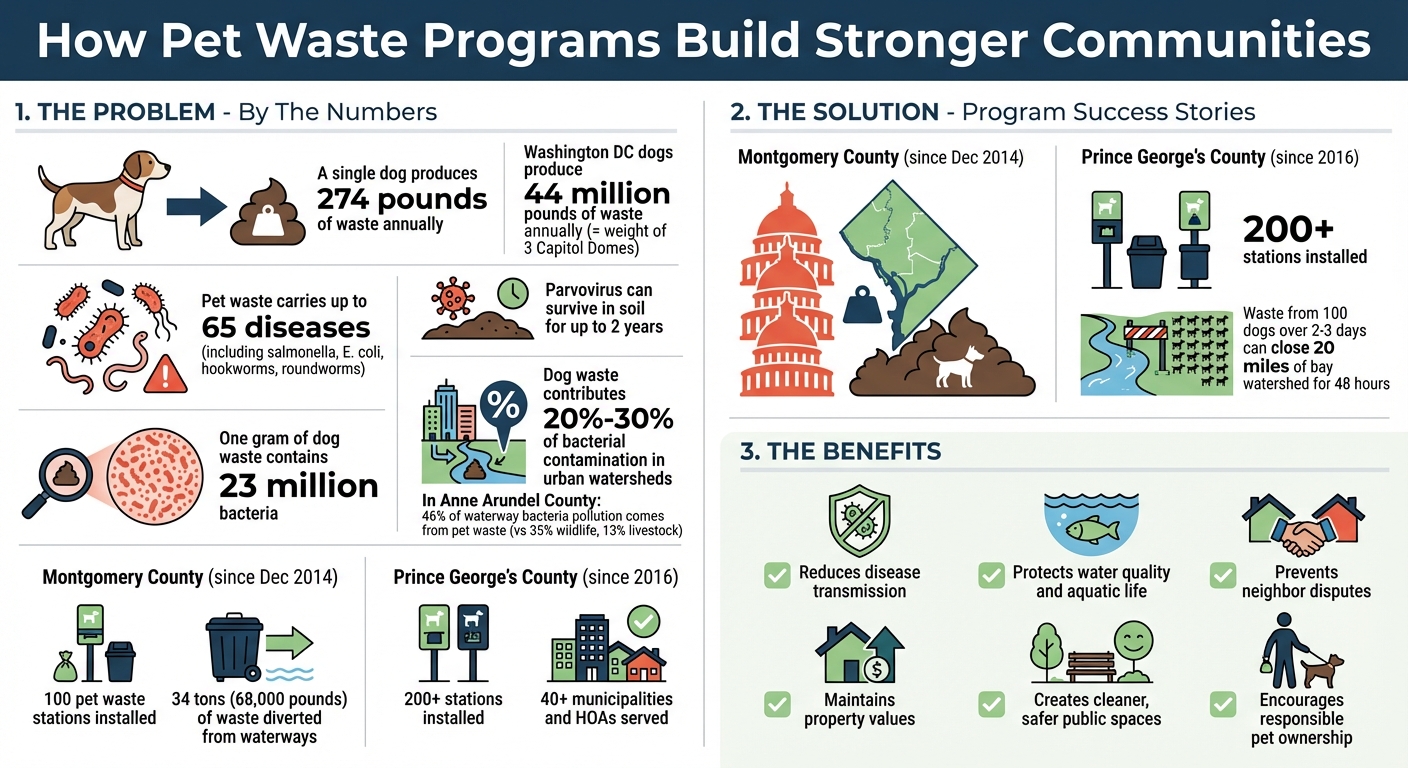
Pet Waste Impact: Health Risks, Environmental Damage, and Community Solutions
Problems Caused by Unmanaged Pet Waste
Health Risks for People and Pets
Pet waste left in public spaces isn’t just unpleasant – it poses a serious health threat to both humans and animals. Dogs can carry up to 65 diseases that may spread to humans, including hookworms, roundworms, and bacterial infections. Even a small amount of waste can harbor millions of harmful bacteria.
What makes this issue even more concerning is how long parasites and viruses can survive in the environment. Some, like parvovirus, can persist in soil for up to two years, resisting most cleaning methods. As Tori Lattig from Professional Pet Care Services explains:
These parasites can crawl out of the poop and live in the soil for long periods of time. The parasites can be transmitted to other animals or even humans.
Uncollected pet waste also attracts pests, which can spread diseases further. Research highlights that dog feces often contain microorganisms that not only harm humans but are also resistant to multiple antibiotics. Beyond these health risks, unmanaged waste takes a toll on natural spaces, affecting the environment and public areas.
Environmental Damage and Declining Public Spaces
The environmental impact of pet waste is staggering. In just two or three days, droppings from 100 dogs can introduce enough bacteria to temporarily close a bay and all watershed areas within 20 miles to activities like swimming and shellfishing.
As waste decomposes, it releases ammonia, nitrogen, and phosphorus into nearby water sources. These nutrients fuel algae blooms, which deplete oxygen levels and suffocate aquatic life. This chain reaction harms ecosystems, disrupts recreational activities, and even affects drinking water supplies. The ripple effect of these environmental issues can also lead to strained relationships among neighbors and a decline in community pride.
Neighbor Disputes and Reduced Community Pride
Uncollected pet waste on sidewalks and in parks often sparks tensions between neighbors, making shared spaces less enjoyable for everyone. The smell, unsightly mess, and risk of tracking waste into homes or cars frustrate residents and discourage the use of public areas. To put the scale of the problem into perspective, dogs in Washington, DC alone produce about 44 million pounds of waste annually – equivalent to the weight of three Capitol Domes.
Disputes can also arise when dog owners dispose of waste in their neighbors’ private trash cans, which is illegal in some areas. As noted by the District of Columbia Community Affairs:
It’s illegal and not neighborly to use another resident’s [trash] can.
These conflicts often lead to complaints filed with city services like 311, creating enforcement challenges and further straining community relationships. When waste builds up, it can prevent families from safely enjoying parks and play areas, eroding the sense of pride and connection that makes neighborhoods thrive.
TOA launches Dog Waste Pod Program
How Pet Waste Programs Solve These Problems
Pet waste programs help keep public spaces clean and encourage responsible pet ownership by combining two main strategies: setting up convenient waste disposal stations and ensuring regular maintenance.
Pet Waste Stations for Easy Disposal
One of the biggest reasons people neglect to clean up after their pets is forgetting to bring bags. Pet waste stations tackle this issue by providing bags and bins at key spots like park entrances, community centers, and trails. This makes proper disposal much more convenient.
Take Montgomery County, for example. Since December 2014, the Department of Environmental Protection has installed 100 pet waste stations, diverting an impressive 34 tons (68,000 pounds) of waste from waterways such as Rock Creek and Anacostia. Prince George’s County followed suit, installing over 200 stations across more than 40 municipalities and homeowner associations since 2016.
These stations also help reduce neighborhood disputes. Instead of using someone else’s private trash can, dog owners have public options for waste disposal. As Mayor Muriel Bowser said when launching DC’s initiative with the Humane Rescue Alliance and Mars Petcare:
Active dog owners help build strong communities. You are a key part of keeping DC clean, safe, and healthy!
Regular Servicing and Sanitation
Of course, placing waste stations isn’t enough on its own – they need regular servicing to stay effective. Maintenance ensures bins don’t overflow, bag dispensers stay stocked, and health risks from accumulated waste are minimized. Just one gram of dog waste can contain 23 million bacteria.
Anne Arundel County’s "Adopt a Neighborhood Pet Waste Station" program highlights the importance of this upkeep. They provide stations with an initial supply of 400 bags and require communities to sign a maintenance agreement to guarantee ongoing care and protect the Chesapeake Bay. Similarly, Montgomery County maintains its stations for the first year before passing maintenance duties to homeowner associations.
Professional servicing also addresses seasonal challenges. It keeps waste from getting buried under snow in winter, hidden by leaves in fall, or causing stronger odors during the summer. This year-round attention is critical, as studies show pet waste contributes up to 46% of bacterial pollution in some county waterways.
Benefits of Pet Waste Programs
Organized pet waste programs bring noticeable improvements to public health, community spaces, and how residents connect with one another. These initiatives are more than just about cleanliness – they make neighborhoods healthier, more inviting, and foster a sense of shared responsibility.
Better Public Health and Safety
Pet waste programs play a key role in reducing the spread of diseases by preventing harmful pathogens from contaminating soil and water.
The impact on water quality is especially striking. In Anne Arundel County, for instance, pet waste accounts for about 46% of bacteria pollution in waterways – outpacing wildlife (35%) and livestock (13%). After rainstorms exceeding 0.5 inches, the county often closes waterways to human contact for 48 hours. Shockingly, just two to three days of waste from 100 dogs can release enough bacteria and nutrients to shut down 20 miles of a bay watershed for swimming and shellfishing. Addressing these issues not only improves health but also enhances the overall appeal of our communities.
Cleaner and More Pleasant Public Areas
Organized waste collection transforms public spaces into clean and inviting environments. Montgomery County’s program has made a noticeable difference by clearing waste from public areas, directly tackling the environmental degradation and unappealing conditions that often arise from unattended pet waste.
Areas left messy with pet waste are unattractive and degrade the quality of life for residents. Pet waste discourages people from coming to local shopping districts and visitors from enjoying local parks and can contribute to lowering property values.
Clean parks and public areas encourage families to spend more time outdoors, support local businesses, and help maintain property values. When spaces are free from waste and unpleasant odors, they become hubs of activity and enjoyment for residents and visitors alike.
Encouraging Responsible Pet Ownership
These programs also promote responsible pet ownership by making cleanup easier and more convenient. When bag dispensers and waste bins are readily available, pet owners are more likely to pick up after their pets, setting a positive example for others and fostering a sense of accountability.
The District of Columbia’s "Pride Is Picking Up" campaign, launched under Mayor Bowser in collaboration with the Humane Rescue Alliance and Mars Petcare, highlights the power of community involvement. Volunteers keep dispensers stocked in locations like Columbia Heights Community Center and Marvin Gaye Park. This kind of teamwork strengthens community pride and neighborly connections.
Montgomery County’s program takes it a step further by offering free onsite evaluations, pet waste stations, and a year of maintenance to eligible homeowner associations through its Department of Environmental Protection. These partnerships make it easier for communities to adopt and sustain waste management efforts.
Responsible pet owners pick up after their pets, both at home and on public land.
When residents see others consistently cleaning up, it encourages them to do the same. Over time, this creates a cleaner, more connected neighborhood where everyone takes pride in their shared spaces. These benefits lay the groundwork for the strategies discussed in the next section.
sbb-itb-d8cd9f4
How to Set Up Effective Pet Waste Programs
Creating an effective pet waste program involves thoughtful planning, setting up the right infrastructure, and encouraging community participation. Here’s how to install pet waste stations, educate residents, and establish clear guidelines to make the program successful.
Installing and Maintaining Pet Waste Stations
Start by identifying areas where pet waste stations will have the most impact – think sidewalks, parks, community centers, and other high-traffic locations. Before installation, call 811 to check for underground utility lines and get written approval if you’re working on community-owned property.
Each station typically includes a sign, a bag dispenser, and, optionally, a trash bin. For example, Anne Arundel County offers a free mini-station that comes with 400 bags. Montgomery County has installed 100 stations, providing free onsite evaluations and a year of maintenance, which has helped collect over 34 tons of pet waste.
To keep the stations running smoothly, assign a volunteer to monitor them regularly. Their tasks might include restocking bags and coordinating waste removal. Alternatively, professional services like DMV Poop Patrol can take on this responsibility, ensuring stations are stocked and sanitized across Maryland, DC, and Virginia. This lets communities focus on other priorities while maintaining clean public spaces.
Once the stations are set up, the next step is educating the community on their proper use.
Education and Community Outreach
Teaching residents about proper pet waste disposal is a key part of the program. In 2017, Prince George’s County launched the "Scoop That Poop" campaign, which included installing 86 stations, handing out brochures, and hosting educational events.
It’s also important to dispel common misconceptions. For instance, many believe dog waste acts as a natural fertilizer, but it’s actually acidic and harmful to plants. Sharing impactful facts can help drive the message home: a single gram of dog waste can contain 23 million bacteria, and waste from just 100 dogs over a couple of days can pollute 20 miles of waterways, making them unsafe for swimming and shellfishing.
To reach diverse communities, create outreach materials in multiple languages. Encourage neighbors to support one another – like carrying extra bags to share with dog owners who might run out. Small yard signs or downloadable posters can also serve as friendly reminders to clean up after pets.
While education is vital, combining it with clear rules and incentives can further improve participation.
Rules and Rewards for Compliance
Establish clear guidelines for pet owners. For example, in Washington, D.C., dog walkers are legally required to clean up after their pets. Residents can report violations through the 311 system or by emailing cleancity@dc.gov.
Pair enforcement with positive reinforcement to encourage compliance. Programs that offer pledges or public recognition for responsible pet ownership can motivate residents.
Montgomery County’s program shows how incentives can lead to success. By offering free stations and a year of maintenance to homeowner associations, they’ve diverted over 34 tons of waste from the local environment. When communities feel supported and see the benefits of their efforts, responsible pet waste management becomes second nature.
DMV Poop Patrol Pet Waste Management Services
DMV Poop Patrol builds on local community efforts by offering professional pet waste management services across Maryland, DC, and Virginia. Whether it’s residential properties, commercial spaces, or pet waste stations, DMV Poop Patrol provides tailored solutions to keep neighborhoods clean, safe, and welcoming.
Available Services
For homeowners, DMV Poop Patrol provides residential cleaning services, ensuring yards are regularly maintained and free of pet waste. On the commercial side, they work with HOAs, apartment complexes, and property managers to deliver customized waste removal services that keep shared spaces clean and enjoyable for everyone.
Their pet waste station management is a full-service solution. It includes everything: site assessments, ADA-compliant installations, routine restocking of bags, replacing liners, repairing dispensers, scheduled inspections, and even eco-friendly odor control measures. These efforts play a role in protecting local watersheds like Rock Creek, Cabin John, and the Anacostia River. By offering flexible scheduling and straightforward pricing, DMV Poop Patrol meets the unique needs of every community it serves.
Why Choose DMV Poop Patrol?
DMV Poop Patrol stands out for its reliability and commitment to environmental safety. They offer flexible scheduling, with options for twice-weekly, weekly, bi-weekly, or even one-time deep cleanings. There are no long-term contracts, giving communities the flexibility to adjust services as needed. Their eco-conscious methods ensure thorough cleanup while keeping the environment in mind, making neighborhoods cleaner and healthier.
For community managers, outsourcing pet waste station maintenance eliminates a major logistical headache. DMV Poop Patrol ensures stations are always stocked, clean, and operational year-round, so managers can focus on other priorities.
Pricing Options
DMV Poop Patrol keeps pricing simple and transparent.
- One-time cleanups: $75–$150
- Weekly visits: $20–$40
- Bi-weekly visits: $35–$60
- Sanitization add-ons: $20–$50 per visit
- Additional dogs: $5–$15 each
This straightforward pricing structure makes it easy for individuals and communities to plan for regular pet waste management without any surprises.
Conclusion
Pet waste programs play a key role in protecting public health and enhancing community spaces. By limiting the spread of 65 diseases and cutting down bacterial contamination in urban watersheds – responsible for 20% to 30% of the pollution – these initiatives create safer, cleaner environments. They ensure children have secure places to play, help maintain strong property values, and foster a sense of pride among neighbors.
Less dog waste in the watershed means a happier and healthier community for all.
– Prince George’s County Department of the Environment
The impact of these programs is clear in the numbers. Since 2014, Montgomery County has collected over 68,000 pounds of pet waste, while dogs in Washington, D.C., contribute approximately 44 million pounds annually – equivalent to the weight of three Capitol Domes. These efforts not only improve water quality but also boost the overall appeal of neighborhoods.
Professional pet waste management services amplify these benefits. DMV Poop Patrol offers dependable, eco-conscious pet waste removal across Maryland, DC, and Virginia. With flexible scheduling, upfront pricing, and meticulous sanitation practices, they help keep communities clean and healthy all year long.
Take the first step toward a cleaner, healthier neighborhood. Visit dmvpooppatrol.com to schedule your service and join the growing number of communities benefiting from professional pet waste management.
FAQs
How do pet waste programs help protect water quality in our communities?
Pet waste programs are essential for keeping water clean and safe. When pet waste is left on the ground – whether on lawns, sidewalks, or in parks – rainwater can carry harmful substances like bacteria, nitrogen, and phosphorus into storm drains. Once these pollutants reach waterways, they can lead to contamination, trigger algal blooms, and deplete oxygen levels, posing serious threats to aquatic ecosystems and public health.
By taking steps to properly manage pet waste, communities can help prevent these issues. This not only protects local streams, lakes, and rivers but also promotes cleaner, healthier spaces for everyone to enjoy.
What are the dangers of leaving pet waste unmanaged?
Unattended pet waste isn’t just unpleasant – it can be a genuine health hazard for both people and the environment. It often contains harmful parasites and bacteria like hookworms, roundworms, giardia, and salmonella. These pathogens can contaminate soil, water, and surfaces, increasing the risk of spreading diseases to humans and other animals.
On top of that, as pet waste breaks down, it releases ammonia and excess nutrients into the environment. These nutrients can disrupt aquatic ecosystems by depleting oxygen levels in waterways, which may lead to problems like algae blooms. Disposing of pet waste properly is a simple but crucial step toward keeping our communities clean, safe, and healthy.
How do pet waste programs promote responsible pet ownership and stronger communities?
Pet waste programs are all about making responsible pet ownership easier and more rewarding for everyone. By simplifying cleanup and making it more accessible, these programs play a key role in keeping public spaces clean, protecting waterways, and reducing the spread of harmful bacteria and parasites.
The most effective initiatives combine education with practical tools like bag dispensers and community-driven efforts such as cleanup challenges or pledges to always pick up after pets. Partnering with services like DMV Poop Patrol, which offers eco-friendly waste removal for homes and businesses across Maryland, DC, and Virginia, can take things a step further by providing stress-free cleanup solutions.
Cleaner parks, odor-free sidewalks, and healthier shared spaces not only make neighborhoods more enjoyable but also boost community pride. These programs encourage residents to work together, fostering a stronger sense of connection and shared responsibility for the places they call home.

