

Pet waste isn’t just messy – it’s a health hazard, an environmental issue, and a source of conflict in HOA communities. Without rules, uncollected waste can spread harmful bacteria like E. coli and parasites such as roundworms, damage property values, and even lead to EPA fines. Clear, enforceable policies help keep neighborhoods clean, protect residents’ health, and maintain property appeal.
Key points:
- Health Risks: Dog waste can carry up to 65 diseases, including Salmonella and Giardia.
- Environmental Impact: Waste runoff pollutes waterways, harming aquatic life.
- Property Value: Neglected waste signals poor management, discouraging buyers.
- Conflict: Lack of rules leads to disputes between pet and non-pet owners.
- Solutions: Policies should include cleanup requirements, fines for violations, and waste stations.
Effective waste policies, supported by proper infrastructure like bag dispensers and professional dog waste disposal services, ensure cleaner, safer, and more welcoming communities.
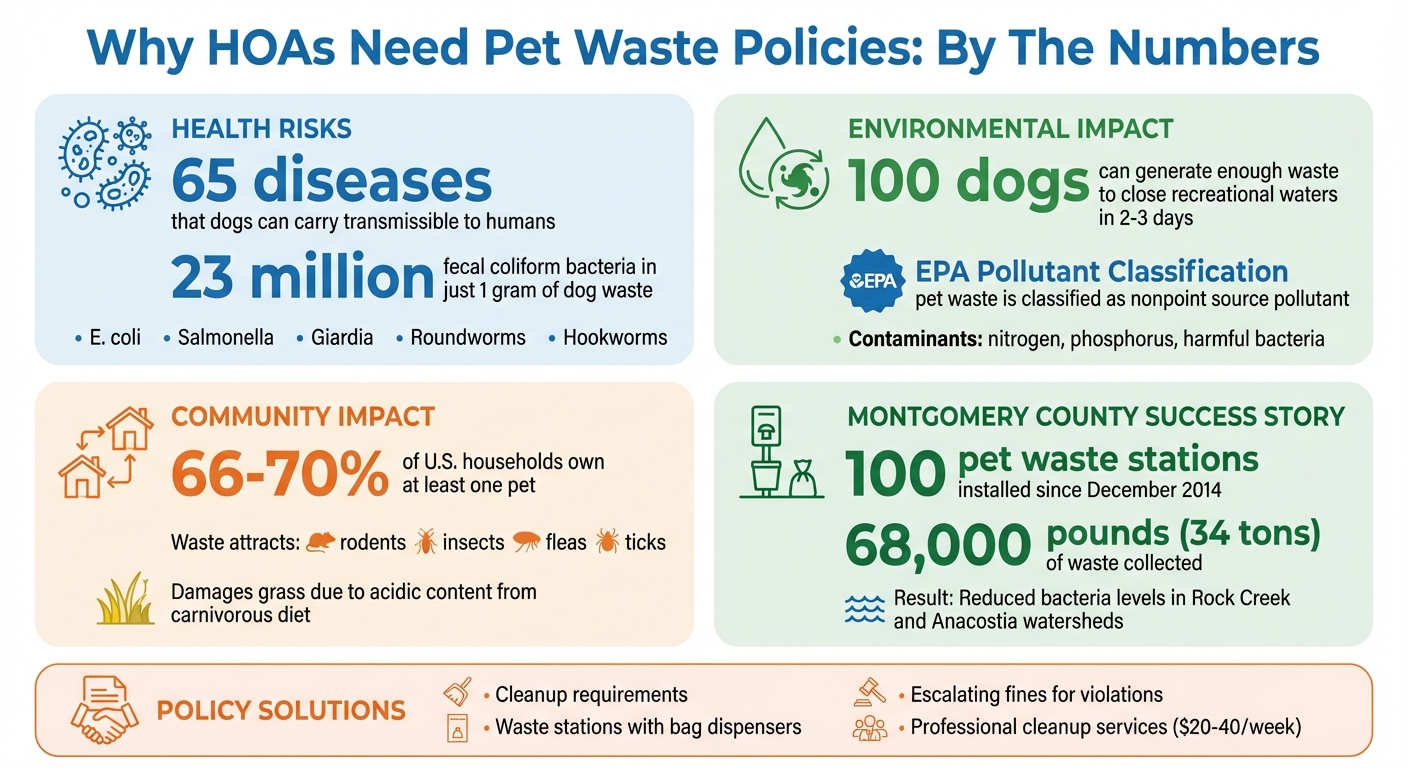
Pet Waste Health Risks and Environmental Impact Statistics for HOA Communities
Problems Caused by Pet Waste in HOA Communities
Health and Environmental Dangers
Uncollected pet waste isn’t just an eyesore – it poses serious health risks. Dogs can carry up to 65 diseases that humans can catch, including salmonella, hookworms, and roundworms. These parasites are particularly concerning because they can live in soil for years, putting children who play outdoors at risk.
"The waste contains harmful bacteria associated with disease, such as salmonella, e. coli, giardia, and campylobacteriosis, which, if left to accumulate on our streets or public areas without proper removal, can be spread to other animals and humans."
– Diana Kavadias, Pet Waste Removal Expert, DoodyCalls
Pet waste also contributes to water contamination. Just 100 dogs can generate enough waste in 2–3 days to force temporary closures of nearby recreational waters. The nitrogen in pet waste depletes oxygen levels in water, harming aquatic life.
It doesn’t end there. Pet waste attracts pests like rodents and insects, which can spread diseases further. And beyond the health risks, uncollected waste makes a neighborhood look neglected, impacting its overall appeal.
Lower Property Values and Poor Appearance
When pet waste is left unattended, it leaves a lasting impression – and not a good one. For potential homebuyers, seeing waste on lawns or brown, damaged grass caused by pet urine can be a dealbreaker. Unlike manure from herbivores, dog waste is acidic due to their carnivorous diet, which kills grass instead of nourishing it.
"Prospective homebuyers are more likely to be drawn to a neighborhood that looks clean and smells fresh. Regular no-contract pet waste services not only keep communal spaces tidy but also enhances the overall appeal of the neighborhood."
– DoodyCalls of Northeast New Jersey
There’s also a financial side to consider. Under the Clean Water Act, the EPA can fine HOAs if pet waste contaminates local waterways. These fines can lead to special assessments on all homeowners, whether they own pets or not. On top of that, unmanaged waste increases operational costs, pulling funds away from other community projects. Professional dog poop service in Maryland can help mitigate these costs by providing consistent, reliable cleanup. All of this can lead to friction among residents and make enforcement even trickier.
Conflicts Between Residents and Enforcement Problems
Pet waste violations are a common flashpoint for conflict in HOA communities. Non-pet owners often feel frustrated when they have to deal with messy communal areas or when their kids can’t safely play outside. These tensions escalate when HOAs are hit with EPA fines, forcing everyone to cover costs caused by a few irresponsible pet owners.
Enforcing pet waste rules is another headache. Without direct witnesses or costly tools like DNA testing, it’s tough to identify violators. Community managers often spend an excessive amount of time handling complaints and enforcement issues, leaving less time for other important tasks. Common excuses like, “I’ll grab it on my way back” or “It’s in the woods” only add to the problem.
When HOA rules (CC&Rs) don’t clearly outline pet waste policies or penalties are inconsistently applied, enforcement becomes even harder. Pet owners may claim they’re being treated unfairly, while non-pet owners feel the board isn’t doing enough to address the issue. These ongoing conflicts highlight the need for clear, consistent rules to manage pet waste effectively in HOA communities.
sbb-itb-d8cd9f4
Why HOAs Must Have Clear Pet Waste Policies
Equal Standards and Enforcement for All Residents
When pet waste policies aren’t clearly outlined in a community’s CC&Rs (Covenants, Conditions, and Restrictions), enforcement becomes inconsistent and subjective. This often leads to conflict, with pet owners feeling unfairly targeted while non-pet owners argue that rules aren’t being applied evenly.
Having these policies documented removes any ambiguity. Everyone knows the rules, reducing disputes and ensuring all residents are treated fairly. A clear, consistent approach not only protects the HOA board from accusations of favoritism but also fosters a sense of fairness among residents. This kind of transparency helps maintain community harmony and safeguards property values.
Protecting Health, Safety, and Property Values
Pet waste isn’t just an eyesore – it’s a health and environmental hazard. The Environmental Protection Agency (EPA) classifies pet waste as a nonpoint source pollutant, meaning it can wash into storm drains and contaminate waterways. This pollution introduces harmful nitrogen, phosphorus, and bacteria into local ecosystems, damaging aquatic life.
There’s also a financial side to consider, including the choice between DIY vs professional waste removal. Clean, well-maintained common areas enhance property values and make the community more appealing. On the other hand, uncollected pet waste sends a message of poor management, which can drive property values down. A great example of proactive management is Montgomery County’s Pet Waste Management Program. Since December 2014, they’ve partnered with HOAs to install 100 pet waste stations, collecting over 68,000 pounds (34 tons) of waste. This effort has significantly reduced bacteria levels in watersheds like Rock Creek and Anacostia. Policies like these not only protect the environment but also reflect well on the community’s overall management.
Key Components of Effective Pet Waste Policies
For a pet waste policy to work, it needs to be specific and enforceable. It should require immediate cleanup from all areas – whether it’s grass, trails, planters, or wooded spaces – and mandate proper disposal in designated trash bins. Leash rules in common areas also help ensure pet owners can monitor their pets and clean up after them.
To address non-compliance, establish a clear enforcement process. Start with a warning, followed by written notices, and impose escalating fines for repeat violations. This step-by-step approach gives the board a clear path to resolve issues without constant disputes.
For communities facing persistent issues, some HOAs have turned to DNA registration programs. Pet owners submit a DNA sample when registering their pets, allowing uncollected waste to be traced back to the responsible party. While this might feel like a drastic measure, it removes any guesswork and ensures accountability. It’s a creative solution for tackling a messy problem and keeping neighborhoods clean.
Over 1.8 Million Scooping Poop For HOA’s (Get BIG Commercial Contracts)
How to Create and Implement Pet Waste Policies
Tackling pet waste issues involves turning policy ideas into actionable steps. Once the key elements of your policy are outlined, here’s how to design and roll out an effective pet waste management plan.
Identify Community Needs and Problem Areas
Start by walking through your community to identify spots where pet waste tends to pile up – think trails, sidewalks, and building entrances. Maintenance staff can be a great resource for flagging recurring trouble areas. Dive into complaint logs to see which locations residents mention most often and look for patterns in timing or specific problem zones. Create a map of these hotspots and compare it with the locations of existing waste stations to spot any gaps. If you’re based in Maryland, DC, or Virginia, consider reaching out to your local environmental agency for an expert evaluation.
Once you’ve mapped out the problem areas, the next step is to draft rules that are both clear and enforceable.
Write Clear and Enforceable Rules
Draft rules that outline where pets are allowed and require immediate cleanup of waste across all surfaces – whether it’s lawns, sidewalks, trails, or natural areas. Specify that waste must be bagged and disposed of in designated bins, and include these rules in your community’s Covenants, Conditions, and Restrictions (CC&Rs) to make them legally binding. It’s important to note that federal fair housing laws protect service and emotional support animals, but their owners are still responsible for cleaning up after them and following leash rules.
To ensure compliance, set up a three-step enforcement process: start with a friendly reminder, escalate to a written violation notice, and, for repeat offenders, impose fines. In California, for example, Cal. Civ. Code §4715 prohibits blanket pet bans, emphasizing the importance of having clear and targeted waste management policies.
With the rules in place, the next focus should be on improving infrastructure and services to support compliance.
Add Infrastructure and Professional Services
Strategically place pet waste stations in high-traffic areas like mailboxes, trail entrances, and green spaces – anywhere residents are likely to walk their dogs. Each station should include a bag dispenser, a covered trash can, and clear signage. Reflective aluminum signs are a cost-effective way to remind residents of their responsibilities.
For larger communities, consider hiring professional services like DMV Poop Patrol. They can handle regular cleanups, empty bins, restock bags, and provide photo-confirmed visits. These services typically cost between $20 and $40 per week and help reduce the workload for your staff.
Benefits of Pet Waste Policies for HOA Communities
Better Health, Safety, and Environment
Implementing effective pet waste policies can significantly improve the cleanliness and health of a community. Dog waste, for example, is a major source of harmful pathogens. Just one gram of it can contain around 23 million fecal coliform bacteria, and dogs can carry up to 65 diseases that can spread to humans. Regular cleanup of pet waste helps control the spread of diseases like heartworms, hookworms, roundworms, Giardia, Salmonella, and E. coli. Beyond health, it also protects the environment – waste from just 100 dogs can pollute nearby recreational waters in as little as 2 to 3 days.
Take Montgomery County, for instance. Since December 2014, their Pet Waste Management Program has installed 100 collection stations across HOAs, removing over 68,000 pounds (34 tons) of pet waste. This effort has helped reduce bacterial levels in watersheds like Rock Creek and the Anacostia. Proper disposal also prevents nitrogen and phosphorus runoff, which can pollute groundwater, streams, and lakes. Additionally, regular waste removal cuts off a food source for rodents, which can carry fleas, ticks, and other diseases. These combined efforts create a healthier, cleaner, and more inviting community.
Improved Community Appearance and Property Values
Cleaner neighborhoods don’t just feel good – they look good, too. Keeping common areas free of waste and odors makes a strong first impression on potential buyers. As DoodyCalls of Northeast New Jersey puts it:
"Prospective homebuyers are more likely to be drawn to a neighborhood that looks clean and smells fresh… This can positively affect property values, which benefits both current residents and the HOA itself".
Pet waste policies also help preserve green spaces, turning neglected areas into attractive amenities like playgrounds, trails, and lawns. Without proper cleanup, dog waste can damage grass and ornamental plants due to its acidity. Considering that 66% to 70% of U.S. households own at least one pet, features like well-maintained waste stations and dog parks are not just conveniences – they’re key to keeping residents happy and boosting property demand.
Easier HOA Operations and Happier Residents
Clear, well-communicated pet waste policies don’t just enhance health and curb appeal – they also make life easier for HOA managers and residents. When rules and penalties are clearly outlined in the CC&Rs, enforcement becomes more straightforward, reducing complaints about waste "landmines" and unpleasant odors. This consistency helps to prevent conflicts between neighbors.
Professional pet waste services, like DMV Poop Patrol, bring additional benefits. They provide photo-confirmed visits and detailed service reports, giving HOA managers an easy way to monitor performance. Outsourcing waste management also frees up maintenance teams to focus on other priorities. Dedicated dog parks, which concentrate waste in specific areas, serve a dual purpose – they simplify cleanup and create social spaces for residents. This approach fosters a sense of shared responsibility and helps maintain harmony between pet owners and non-pet owners alike.
Conclusion
Clear and well-thought-out pet waste policies are essential for HOA communities aiming to protect residents’ health, uphold property values, and maintain harmony among neighbors. By setting specific rules and backing them up with the right infrastructure – like conveniently located pet waste stations – HOA boards make it easier for residents to comply, leaving little room for excuses. Pet waste is more than just an inconvenience; it poses real health risks and requires proactive management.
That’s where DMV Poop Patrol steps in. They handle the heavy lifting by managing critical tasks like restocking waste bags, emptying bins, and conducting regular cleanups in high-traffic areas. This allows HOA maintenance teams to focus on other pressing needs while keeping shared spaces clean and safe.
Of course, written policies alone aren’t enough. Consistent enforcement – through warnings, written notices, and escalating fines – creates a sense of fairness and encourages everyone to follow the rules. When residents see that policies are applied equally, tensions between pet owners and non-pet owners tend to ease.
FAQs
How can pet waste policies benefit HOA communities?
Pet waste policies are essential for keeping HOA communities clean and inviting. When pet owners take responsibility for disposing of waste properly, it helps eliminate unpleasant smells, minimizes health hazards, and ensures that shared spaces remain safe and enjoyable for everyone.
Beyond cleanliness, having clear guidelines for pet waste management can boost the neighborhood’s overall appeal. Well-maintained common areas not only make the community more pleasant for current residents but also attract potential buyers, helping to preserve property values. Enforcing these rules thoughtfully encourages a sense of pride and accountability among homeowners, creating a healthier and more harmonious place to live.
What health risks can uncollected pet waste cause?
Unattended pet waste isn’t just unpleasant – it can be a serious health hazard for both humans and animals. It often carries harmful bacteria like E. coli, Salmonella, and Campylobacter, along with parasites such as roundworms, hookworms, and giardia. These can cause illnesses ranging from stomach cramps and diarrhea to more severe intestinal infections.
Beyond health concerns, leftover pet waste can seep into soil and water sources, spreading diseases and creating unsafe conditions for your community. Cleaning up after pets isn’t just courteous – it’s a key step in keeping your neighborhood clean, safe, and healthy.
What steps can HOAs take to manage pet waste effectively?
To keep shared spaces clean and pleasant, HOAs should implement straightforward policies that require pet owners to pick up after their animals. These rules should be part of the community’s governing documents and clearly communicated to residents through newsletters, signs, and other reminders. Enforcing these policies consistently is key – this includes applying the rules evenly and issuing warnings or fines for repeat offenders.
Offering practical tools can make it easier for residents to follow the rules. Installing pet waste stations equipped with bag dispensers and trash bins helps ensure cleanup is convenient. Additionally, partnering with a professional service like DMV Poop Patrol can handle regular waste removal and sanitation, keeping common areas clean and pleasant.
Educating the community is another important step. Sharing information about the health and environmental risks of pet waste can encourage a sense of shared responsibility. Hosting neighborhood clean-up events or including tips in newsletters can motivate residents to contribute to a cleaner, more welcoming community.

