

Pet waste isn’t just a nuisance – it’s a health and environmental hazard. Every year, millions of pounds of dog waste contribute to water pollution, spread harmful bacteria, and even lower property values. Professional pet waste removal services tackle these problems by ensuring consistent cleanup, eco-friendly disposal, and safer outdoor spaces for families, pets, and communities.
Key Takeaways:
- Health Risks: Dog waste can carry up to 65 diseases, including E. coli and Salmonella, posing threats to humans and pets.
- Water Pollution: Rain washes pet waste into storm drains, polluting rivers and bays. Studies show 20% of bacteria in waterways often comes from dog waste.
- Property Impact: Unmanaged waste lowers property values, deters visitors, and harms neighborhood aesthetics.
- Professional Solutions: Services like DMV Poop Patrol provide regular cleanups, sanitization, and odor control to protect public health and local water quality.
These services not only keep yards clean but also help reduce bacteria in waterways, maintain property appeal, and encourage responsible pet ownership.
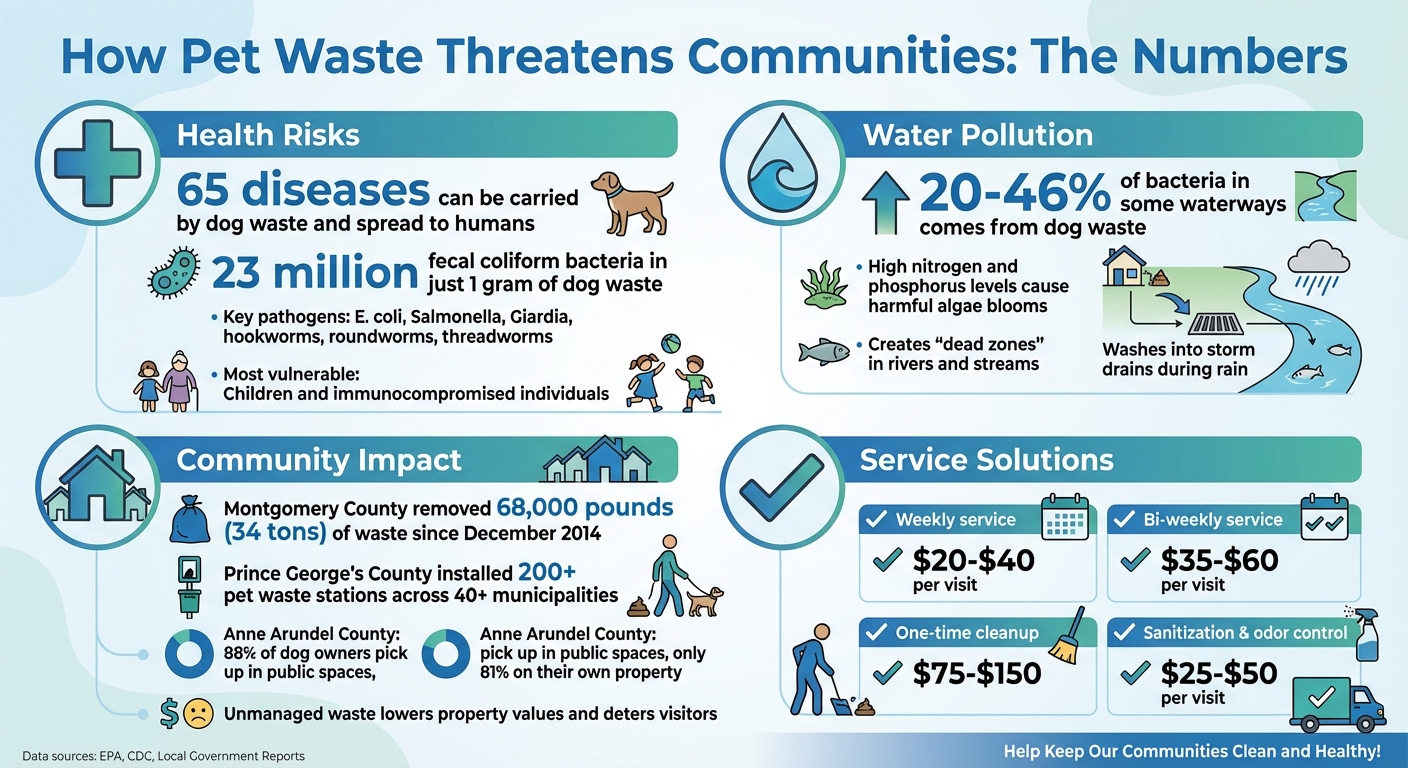
Pet Waste Impact on Community Health and Environment Statistics
The Dangers of Unmanaged Pet Waste
Health Risks for Humans and Pets
Leaving pet waste unmanaged can lead to serious health problems for both humans and animals. According to the U.S. Environmental Protection Agency, dogs can carry up to 65 diseases that can spread to humans. These include harmful pathogens like Salmonella, E. coli, Giardia, hookworms, roundworms, and threadworms.
Children and individuals with weakened immune systems are especially vulnerable when they come into contact with contaminated grass or soil. The National Library of Medicine highlights the risks, stating:
"Dog feces may be a serious hazard because they may contain microorganisms that are both pathogenic to humans and resistant to several classes of antibiotics".
Additionally, waste tracked indoors on shoes can bring these harmful bacteria right into your home.
Pet waste also attracts pests such as flies and rats, which can spread diseases even further. Parasites and bacteria from the waste can linger in yards for weeks or even months, creating long-term health concerns.
Water Pollution and Soil Contamination
When pet waste is left untreated, rain can wash bacteria and nutrients from the waste into storm drains, eventually polluting local rivers, streams, and bays. Pet waste contains high levels of nitrogen and phosphorus, which contribute to harmful algae blooms. These blooms lead to "dead zones" in waterways, forcing closures and threatening aquatic life.
Unlike cow manure, dog waste is not a natural fertilizer. Due to their meat-based diets, dogs produce highly acidic waste that can harm soil and kill grass instead of enriching it. As Baltimore County Government explains:
"Dog waste is not fertilizer. It’s high in protein and is actually bad for your yard and plants".
Effects on Property Values and Neighborhood Appearance
The impact of unmanaged pet waste extends beyond health and environmental concerns – it can also hurt property values and the overall look of a community. The Prince George’s County Department of the Environment notes:
"Areas left messy with pet waste are unattractive and degrade the quality of life for residents. Pet waste discourages people from coming to local shopping districts and visitors from enjoying local parks and can contribute to lowering property values".
Visible waste and unpleasant odors make neighborhoods less appealing. As the Montgomery County Department of Environmental Protection puts it:
"No one likes to find dog poop on the ground. It smells, makes parks and sidewalks look bad, and if you’re not careful, can be tracked into your home on your shoes".
These factors can erode community pride, deter potential homebuyers, and push away businesses, leaving neighborhoods less vibrant and inviting.
How Dog Poo Left on Streets Impacts Human Health | This Morning
How Professional Pet Waste Services Protect Communities
Professional pet waste removal services play a key role in keeping neighborhoods clean, reducing contamination, and ensuring outdoor spaces are safe for everyone.
Regular Pet Waste Removal for Homes and Businesses
Companies like DMV Poop Patrol specialize in regular waste cleanups, offering services that prevent pet waste from piling up on residential and commercial properties. By scheduling weekly or bi-weekly visits, they help create safer environments for families and pets by reducing the spread of harmful bacteria. These services also focus on areas where waste tends to accumulate the most.
For businesses and homeowner associations, proper management of pet waste stations is crucial. Professionals handle the installation, maintenance, and regular emptying of these stations in shared spaces, encouraging responsible disposal. For instance, Prince George’s County has installed over 200 pet waste stations to protect the Anacostia River watershed.
Routine cleanups also shield pets from illnesses like Parvo by maintaining hygienic, waste-free environments. Tools are sanitized using kennel-grade disinfectants after each visit to ensure thorough cleanliness. This systematic approach, combined with environmentally friendly disposal methods, helps maintain the health and safety of communities.
Eco-Friendly Disposal and Sanitation Methods
Proper waste disposal is essential to prevent pollution. By removing pet waste before it can be washed into storm drains by rain, professionals help stop harmful bacteria like E. coli and parasites such as Giardia from contaminating local water supplies, including drinking water reservoirs.
Many services use biodegradable bags to reduce plastic waste in landfills. After collecting waste, they apply non-toxic, pet-safe deodorizing sprays to eliminate odors in yards and shared areas. Some top-tier providers even offer specialized composting that generates high enough temperatures to kill pathogens – something that typical backyard compost piles can’t achieve. These efforts also cut down on food sources for rodents, keeping pests away from residential areas and boosting overall neighborhood health. Scheduling tailored to community needs further enhances these sustainable practices.
Flexible Scheduling and Service Plans
Professional pet waste services cater to a variety of needs with flexible scheduling options. Homeowners can choose from one-time, weekly, or bi-weekly cleanups based on factors like the number of pets and yard size. For example, DMV Poop Patrol offers weekly services priced between $20 and $40 per visit, with bi-weekly options ranging from $35 to $60 per visit.
Commercial properties and apartment complexes typically require more frequent cleanups. High-traffic areas benefit from daily or thrice-weekly services. Costs for small to medium-sized complexes range from $100 to $300 per month, while larger properties may need daily service priced between $400 and $600 per month. Many providers also offer digital logs and photo confirmations, giving property managers clear records of completed services.
Seasonal adjustments add another layer of flexibility. During summer, more frequent visits help control odors that heat can intensify. Similarly, increased cleanups during rainy seasons help curb the spread of bacteria. These adaptable service plans ensure communities stay clean and safe throughout the year, without requiring long-term commitments.
sbb-itb-d8cd9f4
DMV Poop Patrol Service Plans Comparison
Available Service Plans
DMV Poop Patrol offers a variety of service plans, ranging from one-time deep cleanings to regular maintenance, designed to fit the needs of different households and communities. For busy homeowners, the weekly service plan – priced between $20 and $40 – is a popular choice. It helps keep yards safe for kids and pets while preventing waste buildup that can harbor harmful parasites, a vital step for maintaining public health.
For those looking for extra cleanliness, sanitization and odor control services are available for $25 to $50 per visit. These treatments use kennel-grade disinfectants to kill bacteria that regular scooping might miss. If you have multiple dogs, you’ll pay an additional $5 to $15 per pet to ensure all waste is properly managed.
Seasonal cleanups are another option, perfect for tackling specific challenges. For instance, post-winter deep cleans – priced at $150 to $200 – handle waste that accumulates under snow. One-time cleanups, which start at $75 to $150, are ideal for preparing yards for events or addressing neglected areas. All services include photo confirmation of completed work and are designed to withstand weather conditions, ensuring waste doesn’t wash into storm drains during rain.
Here’s a quick breakdown of the available plans:
Service Plans Table
| Service Plan | Price Range | Best For | Key Features |
|---|---|---|---|
| One-Time Cleanup | $75–$150 | Large yards, events, initial cleanups | Deep cleaning with no ongoing commitment |
| Weekly Service | $20–$40 per visit | Busy families, multi-dog homes | Regular maintenance to prevent disease spread |
| Bi-Weekly Service | $35–$60 per visit | 1–2 dog households | Cost-effective, every-other-week cleaning |
| Multi-Dog Households | Base + $5–$15 per dog | Homes with 3+ pets | Scalable pricing to manage waste effectively |
| Sanitization & Odor Control | $25–$50 per visit | High-traffic areas, child-safe yards | Kennel-grade disinfection and deodorization |
| Post-Winter Deep Clean | $150–$200 | After snow melt | Handles heavy waste accumulation |
Standard pricing applies to properties between ¼ and ½ acre, with larger yards requiring a custom quote based on additional time and travel. DMV Poop Patrol has earned a 5-star rating from 9 reviews, with customers highlighting the service’s reliability, even in bad weather, and the convenience of receiving photo updates after each visit.
Long-Term Benefits of Regular Pet Waste Services
Cleaner, Healthier Neighborhoods
Consistent professional pet waste removal plays a key role in creating safer, healthier communities. It helps eliminate up to 65 potential human pathogens, such as hookworms, roundworms, threadworms, and E. coli, that can linger in pet waste. Beyond that, it prevents harmful runoff, which is a major issue – research shows that 20% to 46% of bacteria in some waterways can be traced directly to dog waste. Regular cleanup also curbs nitrogen and phosphorus buildup, which are known to cause "dead zones" in rivers and streams.
Take Montgomery County, for example. Since December 2014, their Pet Waste Management Program has removed over 68,000 pounds (34 tons) of waste using 100 strategically placed stations. This effort has led to a noticeable reduction in bacteria levels in local watersheds like Rock Creek and the Anacostia. On top of protecting waterways, professional services help lawns stay healthy by preventing acidic dog waste from causing those dreaded brown patches. Unlike cow manure, dog waste doesn’t fertilize grass due to dogs’ protein-heavy diets, which makes cleanup even more important. Additionally, regular sanitization helps reduce odors and keeps pests like insects at bay, making outdoor spaces more pleasant for everyone.
These health and environmental benefits naturally enhance the look and feel of neighborhoods, boosting their overall appeal and value.
Better Community Appearance and Property Values
Clean, well-maintained outdoor spaces do more than improve aesthetics – they also protect property values. Pet waste left unattended can attract rodents, which in turn can lower nearby home values. Professional removal services eliminate these issues, keeping neighborhoods visually appealing and free from pests. This also benefits public spaces like parks and shopping districts, where unsightly waste can deter visitors. Even within homeowner associations (HOAs), pet waste is often a hot topic of debate, and professional services can help reduce these tensions.
Prince George’s County provides a great example of how these efforts can pay off. In 2016, the county launched a Pet Waste Management Initiative, installing over 200 waste stations across more than 40 municipalities. This initiative not only reduced nutrient pollution in the Anacostia River but also improved the overall appearance of communities. By keeping neighborhoods clean and inviting, regular professional services help preserve their economic value.
But it’s not just about cleanup – these services also encourage a culture of accountability among pet owners.
Encouraging Responsible Pet Ownership
Professional pet waste services help set a standard for responsible pet ownership. By making waste stations convenient and providing consistent removal options, these services make it easier for all pet owners, including those who may be too busy or physically unable, to do their part. Interestingly, in Anne Arundel County, 88% of dog owners say they pick up after their pets in public spaces, but only 81% do so on their own property. Professional services help close that gap.
Education also plays a big role in shifting perspectives. Programs highlight the fact that pet waste isn’t just an inconvenience – it’s a real public health concern. As the Prince George’s County Department of the Environment puts it:
"Less dog waste in the watershed means a happier and healthier community for all".
Regular removal services also protect families by preventing pets from bringing bacteria and parasites from the yard into the home. Altogether, these efforts create cleaner, healthier communities where residents take pride in shared spaces and pet owners feel empowered to act responsibly.
Conclusion
Professional pet waste removal goes far beyond keeping your yard looking neat – it plays a critical role in protecting community health and the environment. A single gram of dog waste can carry a staggering 23 million fecal coliform bacteria and up to 65 diseases that can spread to humans and other animals. When not properly disposed of, pet waste can wash into storm drains, polluting local waterways. In fact, studies reveal that 20% to 46% of bacteria in some streams comes directly from pet waste.
Local programs have shown that systematic waste removal can dramatically cut down bacterial contamination and nutrient pollution in water sources. These efforts highlight the real-world impact of consistent, professional services in safeguarding watersheds and promoting public health.
On top of environmental benefits, professional waste removal services help maintain property values and make responsible pet ownership easier for everyone. This includes busy families and individuals who may struggle with regular cleanup due to physical limitations.
For residents in Maryland, DC, and Virginia, the importance of clean, safe, and healthy neighborhoods is undeniable. That’s where DMV Poop Patrol steps in, offering dependable, eco-conscious pet waste removal for both homes and businesses. With flexible scheduling, thorough sanitation practices, and proper disposal methods, they ensure that communities stay clean and safe all year long.
FAQs
How does pet waste impact water quality?
Pet waste poses a serious threat to water quality, especially when rain or irrigation washes it into storm drains. It contains nitrogen and phosphorus, which fuel the overgrowth of algae and weeds, throwing aquatic ecosystems off balance. On top of that, pet waste can carry harmful bacteria and viruses, introducing dangerous pathogens into streams, lakes, and rivers. This contamination makes the water unsafe for people, pets, and wildlife alike.
Disposing of pet waste properly is crucial for preventing such pollution, safeguarding both the environment and public health. Professional pet waste removal services play an important part in keeping neighborhoods clean and minimizing these risks.
What health risks can arise from leaving pet waste unmanaged?
Uncollected pet waste isn’t just unpleasant – it’s a health hazard. It harbors bacteria and parasites like hookworms, roundworms, Giardia, and Salmonella, which can lead to issues such as gastrointestinal infections, skin irritations, and even eye problems in humans and animals. When left on lawns, sidewalks, or in parks, these pathogens can hitch a ride indoors on shoes or get washed into storm drains, polluting soil and water resources.
Beyond health risks, pet waste is a major contributor to water pollution. Shockingly, it accounts for around 20% of bacterial contamination in urban waterways. This contamination can result in beach closures and disrupt aquatic ecosystems by promoting the growth of algae and weeds. Services like DMV Poop Patrol play a crucial role in addressing these problems by safely disposing of pet waste, helping to protect public health and maintain cleaner, safer neighborhoods.
How do professional pet waste removal services enhance property value?
Professional pet waste removal services play a key role in keeping outdoor spaces clean and visually appealing, which can directly enhance property value. Regularly clearing pet waste helps avoid unpleasant odors, messy spots, and potential lawn or landscaping damage. These factors contribute to better curb appeal and create a welcoming atmosphere for potential buyers.
But it’s not just about looks. These services also support healthier communities by removing harmful bacteria and parasites – like E. coli and salmonella – that can linger in pet waste. By tackling these health hazards, homeowners can lower the risk of contamination, sidestep potential fines for improper waste disposal, and safeguard their property’s value.
Take DMV Poop Patrol, for example. They provide reliable, eco-conscious waste removal services for residential and commercial properties across Maryland, D.C., and Virginia. A property that’s well-maintained and hygienic stands out in today’s competitive market, often commanding higher resale prices.

