

Pet waste cleanup is more than just a chore – it’s about protecting your yard, family, and waterways. The right tools make the process easier, safer, and better for the planet. Here’s a quick breakdown of popular options for managing dog waste:
- Rake and Bin Systems: Long-lasting and efficient for larger yards; reusable with eco-friendly bags. Cost: $15–$55.
- Claw/Jaw Scoopers: Simple, one-handed operation for quick pickups; durable metal models last longer. Cost: $10–$30.
- Spade and Pan Sets: Reliable for various surfaces; best paired with biodegradable bags. Cost: Low to mid-range.
- Disposable/Refillable Bag Systems: Convenient but depends on bag type for environmental impact. Cost: Medium, ongoing.
- Composting/Digester Systems: Eco-friendly, turning waste into safe material for non-edible plants. Cost: $40–$330 upfront, with some maintenance.
If you’re short on time, professional services like DMV Poop Patrol can handle the job for $20–$40 per visit. Whether you prefer DIY solutions or hands-off convenience, there’s an option that fits your needs and budget.
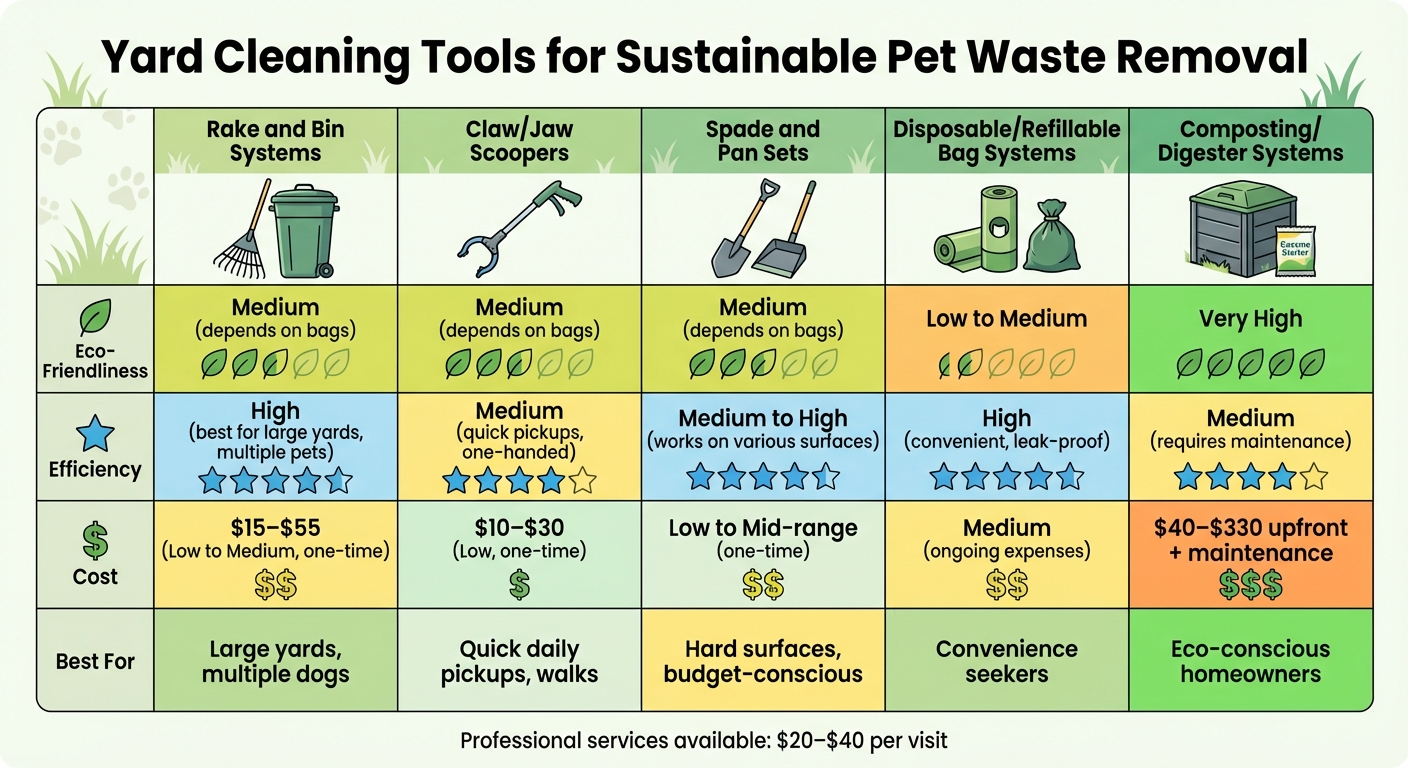
Pet Waste Removal Tools Comparison: Eco-Friendliness, Efficiency, and Cost
Consumer Reports: The best gadgets and techniques to scoop that dog poop
1. Pooper Scooper Rake and Bin Systems
Finding the right tool for cleaning up after your pets is key to keeping your yard tidy while being mindful of the environment. Pooper scooper rake and bin systems combine a long-handled rake with a collection bin, and many top-rated models boast scores above 4.5 out of 5 from thousands of satisfied users.
Eco-Friendliness
These systems help cut down on plastic waste by reducing the need for frequent bag changes. Many designs even allow you to reuse household plastic bags, giving them a second life. For an even greener approach, you can pair these systems with biodegradable waste bags or opt for eco-conscious disposal options like municipal composting, where allowed.
Efficiency
Designed to handle multiple cleanups in one go, these systems are especially useful for large yards or homes with several pets. Their long-handled, one-handed design minimizes the need to bend, making the cleanup process quicker and easier on your back. For example, users of the Walden Simple Scooper have praised its ability to collect an entire week’s worth of waste in a single bag, all while offering no-contact disposal for added convenience.
Cost
Prices for rake and bin systems typically range from $14.99 to $54.99. Built with durable materials like stainless steel and aluminum, these tools are rust-resistant and designed to last. Some premium models even promise a lifespan of over 10 years with regular use, which means fewer replacements and lower long-term costs. Plus, their ability to handle multiple cleanups with fewer bags can help you save on waste bag expenses over time.
Next, we’ll explore other tools that take a different approach to sustainable waste management.
2. Claw or Jaw Style Pooper Scoopers
Claw or jaw-style pooper scoopers offer a simple and efficient way to handle pet waste. With spring-loaded jaws and one-handed operation, they’re handy for both everyday cleanups and more thorough yard maintenance.
Eco-Friendliness
The reusable nature of these scoopers helps cut down on single-use plastic waste, which can linger in landfills for hundreds of years. Most are made from durable plastic, and some manufacturers go a step further by using recycled materials to lessen environmental impact. For those looking for added durability, metal models are a great option – they hold up better in cold weather, where plastic versions might become brittle.
Efficiency
Designed for one-handed use, claw and jaw scoopers make waste collection quick and hassle-free. A simple squeeze of the handle activates the spring-loaded jaws, ensuring a firm grip on the waste to prevent spills. Long handles, typically ranging from 24 to 39 inches, save you from constant bending, making the process easier on your back. Compact versions are perfect for walks, while larger models are better suited for backyard cleanups. These practical features make them a reliable and convenient choice.
Cost
Priced between $10 and $30, claw and jaw-style scoopers are budget-friendly for most pet owners. Heavy-duty plastic and metal models tend to outlast cheaper options, with metal versions standing up to years of heavy use without bending or breaking. While metal scoopers may cost more upfront, their longer lifespan often makes them a smarter investment. Some plastic models even come with antimicrobial additives to help fight odor-causing bacteria, adding more value for your money.
3. Spade and Pan Sets or Trowel-Based Tools
Spade and pan sets offer a simple, no-frills solution for cleaning up yard waste. These tools combine a flat-edged spade with a collection pan, which often features an attached rake for added convenience.
Eco-Friendliness
These tools are typically made from long-lasting, rust-resistant materials like chrome-plated steel, stainless steel, or aluminum, which helps extend their lifespan and reduces the need for frequent replacements. Since they’re fully manual, they don’t rely on electricity or batteries, making them an environmentally conscious choice. For an added green touch, you can pair them with biodegradable waste bags.
Efficiency
How well these tools perform often depends on the type of surface you’re working on. On hard surfaces like dirt, gravel, concrete, or pavement, the flat base of the pan slides easily under waste for quick cleanup. In grassy areas, especially with short and dry grass, the built-in rake helps gather waste more efficiently. However, they’re not ideal for snowy or icy conditions, where sturdier tools might be required. Their straightforward design and low maintenance needs make them a dependable and practical option for many households.
Cost
Spade and pan sets are generally affordable, ranging from budget-friendly to mid-range pricing. Thanks to their durable construction, they hold up well even on abrasive surfaces, reducing the need for frequent replacements. Cleaning them is as simple as rinsing with water, making them a cost-effective choice for homes with multiple pets or higher cleanup demands.
4. Disposable and Refillable Waste Bag Systems
Disposable and refillable waste bag systems are a convenient, low-maintenance solution for handling pet waste. These include traditional plastic bags and newer biodegradable options, each offering different environmental and practical benefits.
Eco-Friendliness
Traditional plastic bags, made from polyethylene, can linger in landfills for 500–1,000 years. Over 500 million of these bags end up in landfills every year. On the other hand, biodegradable bags decompose much faster – typically within 3 to 6 months in composting conditions or 1 to 2 years in regular landfills. Their production also generates 60–80% fewer greenhouse gas emissions compared to petroleum-based bags.
A newer alternative, "landfill-friendly" bags (like Doggy Do Good NEXT™), combines 65% recycled plastic with additives that speed up decomposition in landfills without leaving microplastics behind. Home compostable bags are another eco-conscious choice, though they require specific conditions to break down and have a shorter shelf life. These environmentally friendly options not only help reduce waste but also offer practical benefits for daily use.
Efficiency
Modern waste bags are designed to be durable and leak-proof, eliminating the need for double-bagging. This is especially helpful for households with larger dogs or multiple pets. Their sturdy construction means fewer bags are needed overall, which can help balance the higher upfront cost of eco-friendly options. To save money, consider estimating your monthly usage and buying in bulk. Proper storage is also key – keeping biodegradable bags in a cool, dry place away from sunlight and humidity can prevent early degradation. While these features enhance usability, they do come with a financial factor to consider.
Cost
"Biodegradable bags typically cost 20 to 40% more than conventional plastic bags, but this premium reflects the environmental benefits and often superior construction quality." – Pooch Approved Products, USA
Biodegradable bags usually cost 20–40% more than traditional plastic ones. However, when broken down per walk or month, the extra expense amounts to just a few dollars per dog each year. High-end biodegradable brands can be 2–3 times pricier, but their leak-proof design and durability often eliminate the need for double-bagging, making them a worthwhile investment over time. Landfill-friendly bags, meanwhile, aim to remain cost-competitive with traditional options while still offering environmental advantages.
sbb-itb-d8cd9f4
5. Vacuum-Based and Powered Pet Waste Systems
Vacuum-based pet waste systems offer a modern twist on cleanup by using suction and disposable cups to handle waste without direct contact. These systems run on either battery power or electricity, providing an alternative to traditional manual tools.
Eco-Friendliness
When it comes to environmental impact, powered systems have a few drawbacks. They consume energy – whether through electricity or rechargeable batteries – and often rely on disposable collection cups, which create ongoing waste. On the other hand, manual tools are a one-time investment and don’t require additional resources after purchase. This makes them a more resource-efficient option in the long run. Next, let’s see how these systems stack up in terms of performance.
Efficiency
For large properties or households with multiple pets, vacuum-based systems can be a game-changer. They allow for hands-free cleanup and work well on a variety of surfaces, especially cordless models. However, they do come with a learning curve, and their bulkier design makes them less portable than traditional scoopers. This means they’re better suited for home use rather than being carried around for outdoor tasks.
Cost
The price tag is where vacuum-style devices may give potential buyers pause. They come with a higher upfront cost compared to manual tools. On top of that, you’ll need to budget for ongoing expenses like replacement collection cups, batteries, and occasional repairs. For perspective, professional pet waste removal services can cost as little as $12 per visit, which might make these devices harder to justify unless you’re dealing with a large property or several pets at once.
6. Dog Waste Composting and Digester Systems
Dog waste composting and digester systems provide a sustainable way to manage pet waste while keeping your yard clean. These systems naturally break down waste, offering an eco-friendly alternative to traditional disposal methods. Digesters work by digging a hole, adding pet waste, water, and enzymes to allow the waste to decompose naturally in the ground. Composting systems, on the other hand, rely on worms and microbes to turn waste into a nutrient-rich material suitable for ornamental plants. Both options significantly reduce the use of disposable plastic bags by keeping waste out of landfills.
Eco-Friendliness
These systems contribute to a greener environment by diverting waste from landfills, which helps lower methane emissions and prevents contamination of waterways. Some commercial options, like the Pet Waste Wizard BioBin, are even made using recycled materials and carbon-neutral processes. To ensure safety, always install these systems away from vegetable gardens and water sources to avoid contamination risks.
Efficiency
Vermicomposting systems are faster than traditional composting methods, breaking down waste in about 2–3 months compared to the 6–9 months required by standard composting. Digesters need regular maintenance, such as adding water and enzymes, while composters perform best when balanced with carbon-rich materials like sawdust or leaves. Temperature plays a key role – activity slows when it drops below 40°F, but underground installations can help maintain stable conditions throughout the year.
Cost
You can create a DIY digester on a budget using a plastic garbage can, a drill, gravel, a shovel, and septic tank enzymes. For those preferring ready-made options, basic digesters start at around $40. More advanced systems, like the Subpod Large Pet Poop Composter and the Pet Poo Worm Composter, range from $254 to $329.95. Additional expenses include composting worms, which cost about $50.95 for 2 pounds, and enzyme tablets priced between $17.99 and $36.99. These systems work best in yards with good drainage and mild freezing conditions.
Pros and Cons
When it comes to choosing the right tool, there are always trade-offs. This breakdown highlights the strengths and drawbacks of each option, helping you weigh eco-friendliness, efficiency, and cost to find the best fit for your needs.
Rake and Bin Systems are great for handling multiple cleanups efficiently. However, they’re not very portable and require separate waste bags, which adds to the overall cost.
Jaw and Claw Scoopers make quick work of pickups on hard surfaces. That said, cheaper plastic versions may not hold up well on softer or grassy terrain.
Spade and Pan Sets are versatile and work well when paired with eco-friendly bags, making them a solid choice for long-term use.
Disposable Bag Systems prioritize convenience, but their environmental impact depends heavily on the type of bags used.
Composting and Digester Systems shine in sustainability by keeping waste out of landfills. However, they come with a higher upfront investment and require regular upkeep.
| Tool Type | Eco-Friendliness | Efficiency | Cost |
|---|---|---|---|
| Rake and Bin Systems | Medium (depends on bags) | High | Low to Medium |
| Jaw/Claw Scoopers | Medium (depends on bags) | Medium | Low |
| Spade and Pan Sets | Medium (depends on bags) | Medium to High | Low |
| Disposable Bag Systems | Low to Medium | High | Medium (ongoing) |
| Composting/Digesters | Very High | Medium | Medium to High |
For those looking to balance affordability and durability, Rake and Bin Systems and Spade and Pan Sets are reliable options, especially when paired with eco-friendly bags. Meanwhile, homeowners focused on reducing their environmental footprint might lean toward Composting Systems, which offer unmatched sustainability but come with higher initial costs and maintenance needs. This overview can help guide you toward the best choice for your budget, efficiency goals, and environmental priorities.
Conclusion
Picking the best yard cleaning tool comes down to your specific needs. If you have a large yard or multiple dogs, tools like rake-and-bin systems or vacuum-based options are great for handling bigger messes quickly. For smaller yards or households with one dog, jaw/claw scoopers or spade-and-pan sets are convenient and easy to store. When dealing with hard surfaces like concrete, jaw/claw scoopers or spade tools work well, while grassy or gravel areas are better suited for rake systems or flexible rubber tools.
It’s also worth thinking about the environmental impact of your choice. Tools made from recycled materials and paired with certified compostable bags can help reduce waste. Composting systems and waste digesters are eco-friendly options, though they may require more effort and come with higher upfront costs. No matter your tool, proper disposal is key to protecting your family and local waterways.
Budget plays a role, too. Manual tools are affordable and work well for occasional cleanups, while powered systems come with higher upfront costs and ongoing expenses, especially for multi-pet households. These cost factors often reflect the performance differences discussed earlier.
If you’d rather skip the hassle entirely, professional services like DMV Poop Patrol offer a hands-off solution. They handle everything from regular waste pickups to eco-friendly disposal, keeping your yard clean and safe without the effort. Starting at about $20–$40 per weekly visit, these services are ideal for busy pet owners, those with mobility challenges, or households with multiple dogs. They also include extras like sanitation, odor control, and photo confirmations for peace of mind.
FAQs
What are the best eco-friendly ways to dispose of pet waste?
Eco-friendly ways to handle pet waste not only help cut down on plastic use but also turn waste into something that benefits the planet. Here are a few smart options you can try:
- Pet waste composting: Using a high-temperature composting system, pet waste can be broken down safely. The result? A soil amendment perfect for non-food plants, all while keeping waste out of landfills.
- Biodegradable or compostable bags: These bags, made from plant-based materials, break down much more sustainably than traditional plastic. Just make sure to follow proper disposal guidelines to get the best results.
- Reusable pooper scoopers: A durable scooper eliminates the need for single-use bags. Once collected, waste can either be composted or disposed of in an eco-friendly way.
If you’re looking for a stress-free, green solution, DMV Poop Patrol has you covered. Operating in Maryland, DC, and Virginia, they offer professional pet waste removal services that keep your yard clean while prioritizing environmentally friendly practices.
What are composting and digester systems, and how do they help with pet waste disposal?
Composting systems turn pet waste into nutrient-rich material by harnessing microbial activity. The process involves mixing the waste with a carbon source, like shredded paper or wood chips, and placing it in a sealed bin. Inside the bin, temperatures between 130°F and 160°F are reached, effectively killing most pathogens. Over time, this mixture breaks down into compost, which can be safely used for non-edible plants. Another option is worm-based composting, which offers a low-odor, low-maintenance approach. However, even these systems require some regular upkeep to keep things running smoothly.
In-ground digester systems, on the other hand, function similarly to small septic tanks buried in your yard. These systems rely on enzymes and bacteria to break down waste into a liquid that filters safely into the soil. To keep them working efficiently, they occasionally need water flushing and enzyme additions, especially in temperatures above 40°F. While the initial cost of digesters is higher – ranging from $150 to $300 – they reduce reliance on plastic bags and can save on long-term disposal expenses.
For those seeking a completely hands-off option, DMV Poop Patrol offers professional pet waste removal services in Maryland, DC, and Virginia. They handle everything from cleaning yards to servicing waste stations and sanitizing areas, making it easier for homeowners to manage pet waste in an eco-friendly way.
Are biodegradable pet waste bags better for the environment?
Biodegradable pet waste bags offer a greener alternative to traditional plastic bags since they’re designed to break down more readily. That said, many of these bags are still made using fossil-fuel-based materials and require specific conditions – like those found in commercial composting facilities – to decompose properly.
To make a real difference, look for bags labeled as certified compostable and dispose of them correctly. If they end up in regular landfills, they might not degrade as expected, limiting their environmental benefits.

