

If you’re a dog owner, managing pet waste isn’t just about keeping your yard tidy – it directly impacts your dog’s health, your family’s safety, and your community’s well-being. Dog waste can carry harmful bacteria like E. coli and Salmonella, along with parasites such as roundworms and Giardia, posing risks to both humans and pets. Uncollected waste also contaminates waterways, contributes to air pollution, and attracts pests like rats.
Key Takeaways:
- Health Risks: Dog waste contains millions of bacteria and parasites that can cause illnesses, including stomach issues, respiratory infections, and skin conditions.
- Environmental Impact: The EPA classifies dog waste as a pollutant; runoff from uncollected waste can harm water quality and aquatic life.
- Safe Cleanup Tips: Use biodegradable bags, clean up daily, and consider eco-friendly disposal methods like pet waste digesters.
- Professional Help: Services like DMV Poop Patrol offer thorough yard cleanups, sanitation, and eco-conscious waste disposal, starting at $22.65 per week.
Proper waste management safeguards your pet, protects your family, and helps create a cleaner, safer environment for everyone.
Health Risks from Pet Waste
Pathogens and Diseases in Dog Waste
Dog waste is a breeding ground for harmful pathogens. Just a single gram can contain a staggering 23 million fecal coliform bacteria, including E. coli, Salmonella, and Campylobacter – double the amount typically found in human waste. It’s also a carrier of parasites like roundworms, hookworms, tapeworms, and Giardia.
These pathogens can cause serious health problems. For instance, infections from Salmonella and E. coli may result in dehydration, fever, and painful abdominal cramps in both humans and dogs. Roundworms can lead to toxocariasis, a condition that can damage organs and, in severe cases, even cause blindness if larvae migrate to the eyes. Alarmingly, the CDC reports that 14% of Americans test positive for roundworms.
Hookworms pose another risk, as they can penetrate the skin and cause itchy, inflamed tracks, a condition known as cutaneous larva migrans. Meanwhile, Giardia infections often lead to prolonged diarrhea and dehydration, particularly in young children and older adults. What’s worse, roundworm eggs can remain infectious in soil for years, turning parks and yards into long-term contamination zones. Dog feces can also contain antibiotic-resistant bacteria, such as vancomycin-resistant enterococci (VRE).
These dangers don’t just threaten human health – they also put your dog at risk.
How Contaminated Environments Affect Dog Health
For dogs, exposure to contaminated areas can lead to serious infections. Pathogens can enter through tiny cuts on their paws or be ingested while grooming or chewing on grass. This can result in vomiting, diarrhea, and a loss of appetite.
One particularly dangerous threat is parvovirus, a highly contagious virus that can survive in the environment for more than six months. It’s especially deadly for unvaccinated puppies. Chronic exposure to contaminated soil or water can also lead to ongoing symptoms like diarrhea, weight loss, lethargy, and recurring skin irritations, all of which indicate a weakened immune system. If your dog experiences persistent diarrhea, sudden weight loss, or skin issues, it’s crucial to consult a veterinarian. Regular vet visits and fecal exams can help detect and address infections early.
The best way to protect your dog is by keeping their environment clean. Promptly removing pet waste reduces the buildup of harmful pathogens and creates a safer space for everyone.
Public Health and Environmental Effects
The risks extend beyond individual health. Pet waste is also a major environmental hazard. The EPA classifies dog waste as a nonpoint source pollutant, grouping it with oil spills and herbicides. When left uncollected, rainwater washes dog waste into waterways, spreading bacteria. In fact, the EPA estimates that just 2–3 days of waste from 100 dogs can introduce enough bacteria to temporarily close a bay and contaminate watersheds up to 25 miles away. Studies, such as the Long Island Sound Study, have shown that uncollected pet waste increases bacterial levels in urban waterways, leading to beach closures and restrictions on shellfish harvesting.
Pet waste also contributes to environmental degradation. Nitrogen and phosphorus from the waste fuel algal blooms, which deplete oxygen levels and harm aquatic life, often causing fish die-offs. As the waste decomposes, it releases ammonia and other gases, creating unpleasant odors and worsening respiratory problems for people with asthma or allergies.
In cities, uncollected pet waste can attract rats, which spread diseases like leptospirosis and typhus. The Enviro Pet Waste Network estimates that 6.5 million tons of dog waste is produced annually in the US, with more than half ending up in landfills. This creates ongoing environmental challenges.
Children are particularly vulnerable, as they often play on the ground where contaminated soil or grass can lead to infections like toxocariasis or cutaneous larva migrans. Similarly, older adults and those with weakened immune systems face higher risks of contracting bacteria such as E. coli and Salmonella.
Some communities are taking action. In 2023, the City of Albuquerque launched a stormwater pollution prevention program to address pet waste’s impact on water quality and public health. This initiative has increased public awareness and inspired community clean-up efforts.
How to Manage Pet Waste Safely
Daily Waste Removal and Disposal
Cleaning up after your dog promptly is essential. Use a sturdy scooper or a reliable bag to pick up waste as soon as possible. This simple habit helps stop harmful bacteria from spreading in your yard or neighborhood.
When handling waste, opt for a leak-proof bag – biodegradable options are a great choice – and make sure to seal it tightly before throwing it away. Always place the sealed bag in a designated trash bin, not in storm drains or on the ground. Once you’re done, wash your hands thoroughly to avoid spreading bacteria.
Most U.S. cities and counties have "pooper scooper laws" that require dog owners to clean up after their pets. Fines for not following these laws can range from $50 to $500. Beyond avoiding fines, promptly removing waste protects your family, neighbors, and pets from harmful germs.
To stay on top of things, keep waste bags near entryways and check your yard daily – more often if you have multiple dogs – to prevent waste from piling up. For those looking to go the extra mile, there are eco-friendly ways to dispose of pet waste that are worth considering.
Eco-Friendly Disposal Methods
Traditional plastic bags can linger in landfills for centuries, so switching to biodegradable or compostable bags made from cornstarch or plant-based materials is a smarter choice. These alternatives break down faster and are better for the planet.
Another option is installing an in-ground pet waste digester. These systems work like mini septic tanks, using enzymes and water to break down waste. While they require proper setup and regular maintenance, they offer an environmentally friendly solution.
In some areas, municipalities have started accepting pet waste in specific composting programs. However, availability varies, so check with your local waste management services. Keep in mind that dog waste should never go into a home garden compost bin, as standard composting doesn’t reach the high temperatures needed to kill harmful pathogens. Always use systems designed specifically for pet waste.
In the Maryland, DC, and Virginia areas, services like DMV Poop Patrol double-bag pet waste in compostable trash bags to ensure eco-friendly disposal practices.
"At DMV Poop Patrol, we ensure all waste is disposed of responsibly using eco-friendly practices, promoting a clean and safe community." – DMV Poop Patrol
Keeping Your Yard Clean and Odor-Free
Proper waste disposal is just the beginning. To keep your yard smelling fresh, regular cleaning and maintenance are key. After picking up visible waste, treat the area with enzymatic cleaners or pet-safe disinfectants. These products help break down any leftover organic material.
Rinse high-traffic areas with a hose to wash away bacteria and prevent odors. Make sure your yard has good drainage to avoid standing water, which can attract pests. Keeping your grass trimmed and clearing debris also helps reduce areas where odors can linger.
Dog waste is acidic and can damage lawns, causing brown spots and stunting plant growth. A consistent cleaning routine not only keeps your yard looking good but also safeguards the health of your family and pets.
If managing all this feels overwhelming, professional services like DMV Poop Patrol can step in. They offer regular cleanups and use kennel-grade disinfectants to sanitize equipment and footwear, reducing the risk of spreading germs. With an estimated 6.5 million tons of dog waste produced annually in the U.S. – and about 54% of it ending up in landfills – staying on top of waste management is crucial. Regular upkeep also protects vulnerable groups, like children, the elderly, and those with weaker immune systems, from harmful bacteria. Combining these practices with professional help ensures a clean and healthy environment for everyone.
Professional Pet Waste Removal Services
Benefits of Hiring Professional Services
Dealing with pet waste isn’t exactly anyone’s favorite chore. It’s messy, time-consuming, and, let’s face it, not the most pleasant way to spend your day. That’s where professional pet waste removal services come in – they handle the dirty work so you can enjoy more quality time with your furry friend. These services don’t just save you time; they also ensure a level of cleanliness that’s tough to achieve on your own. Using specialized tools and techniques, professionals can clean up waste even in tricky spots like flower beds, under bushes, or along fences. By tackling every last bit, they help prevent harmful bacteria from lingering in your yard. DMV Poop Patrol is a standout example of how professional services can make a real difference.
The health perks are also worth noting. Prompt waste removal helps curb the spread of dangerous pathogens, offering added peace of mind for families with kids or immunocompromised members. Plus, it’s not just about health – it’s about protecting the planet, too. According to the EPA, dog waste ranks as a major nonpoint source of water pollution, on par with oil spills and pesticides. Regular cleanups also keep your lawn looking its best by preventing the acidic waste from causing unsightly brown patches or unpleasant odors.
Here’s a real-world example: A suburban Maryland neighborhood partnered with DMV Poop Patrol for weekly cleanups in shared spaces and maintenance of pet waste stations. The results? Residents noticed less odor, fewer pests, and cleaner green spaces. They also reported a drop in water runoff contamination, showing just how impactful professional services can be.
DMV Poop Patrol Services Overview
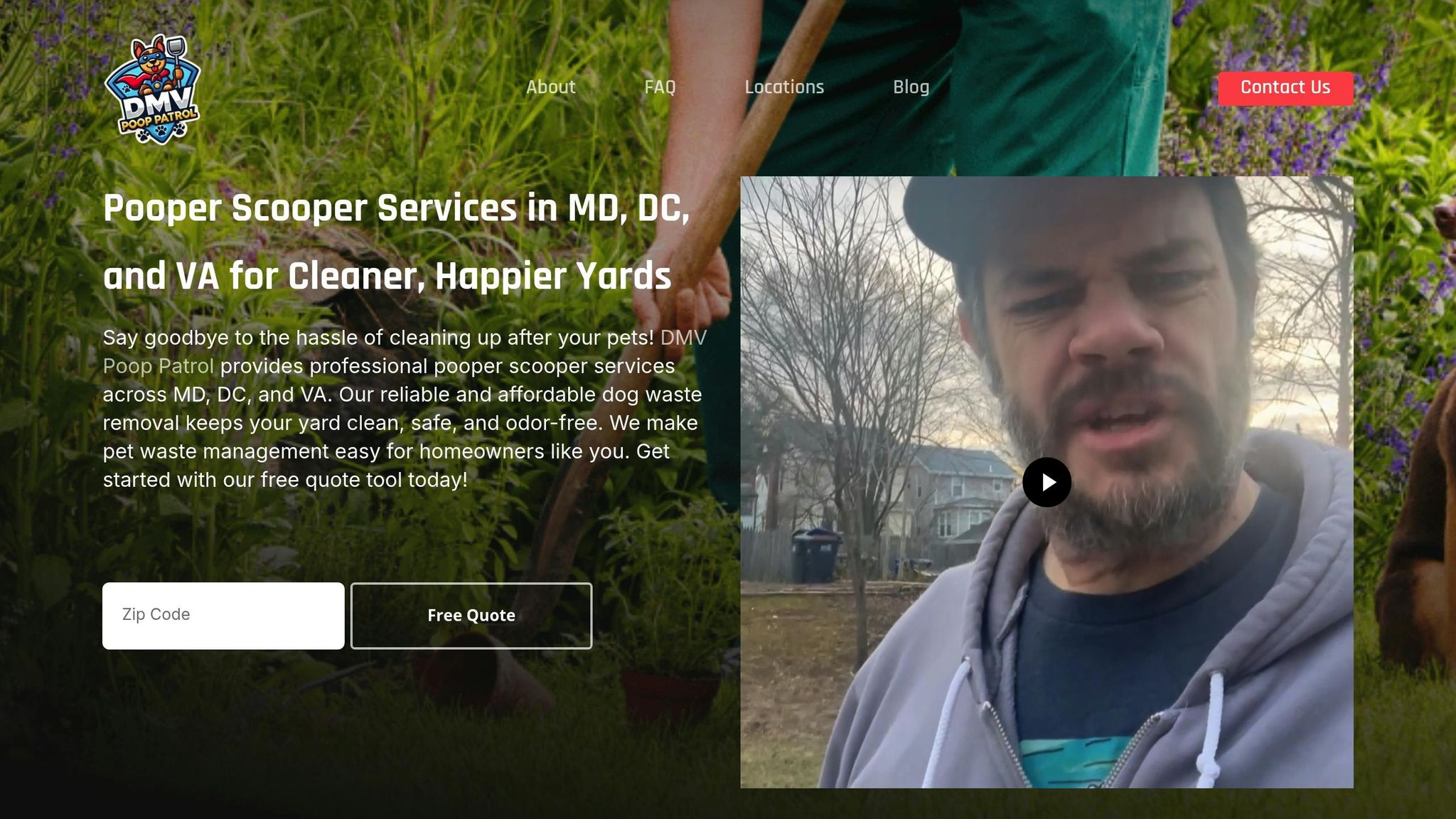
DMV Poop Patrol takes pet waste management to the next level with their thorough and reliable services. Covering residential and commercial properties across Maryland, DC, and Virginia, they offer complete yard cleanups that include front yards, backyards, side yards, flower beds, and dog runs. Their technicians don’t just remove visible waste – they also treat affected areas to eliminate bacteria and odors. To ensure the highest standards of cleanliness, all equipment and footwear are disinfected with kennel-grade solutions after every visit.
"We’re dedicated to protecting your pets and family with thorough sanitation practices and eco-friendly waste disposal. Clean yards, happy homes – that’s our mission!" – DMV Poop Patrol
For businesses, DMV Poop Patrol provides tailored services like installing and maintaining pet waste stations and cleaning common areas in places like apartment complexes, parks, and pet-friendly businesses. They operate year-round, offering photo confirmation after each visit and flexible scheduling options – all without locking you into long-term contracts.
Service Plans and Pricing Options
DMV Poop Patrol keeps pricing straightforward and flexible, basing costs on yard size, service frequency, and the number of dogs. For instance, weekly service starts at $22.65, which is ideal for most single-dog households. If you have a smaller yard, bi-weekly service might be a more budget-friendly choice.
For homes with multiple dogs, the cost increases slightly, typically adding $5 to $15 per additional dog. As one happy customer shared:
"Great 👍🏽 having 3 German Shepherds this was the best decision and very reasonable price 😊" – Nadine Jones
They also offer one-time cleanups for special circumstances, like post-winter yard overhauls or move-ins. These services generally cost between $75 and $150, depending on the yard size and the amount of waste. For an extra layer of cleanliness, you can add sanitization and odor control for $20 to $50 per visit. These treatments use professional-grade disinfectants and deodorizers that are both pet-safe and environmentally friendly.
What’s great is their no-contract policy, which gives you complete flexibility. You can request a free quote online, change your service frequency, or cancel anytime without hassle. One satisfied customer had this to say:
"These guys do an amazing job with my yard! Their flexible billing arrangements are a lifesaver, especially for someone o…" – Gavin Pitt
With an estimated 6.5 million tons of dog waste produced annually in the U.S. – and over half of it left uncollected – services like DMV Poop Patrol are doing more than just cleaning up yards. They’re helping protect public health, preserve the environment, and make life a little easier for pet owners across the DMV area.
sbb-itb-d8cd9f4
Prevention Strategies for Long-Term Health
Regular Cleaning Schedules and Hygiene Habits
Keeping up with a daily cleaning routine is key to minimizing health risks tied to pet waste. If you’ve got a busy household with multiple dogs or active kids, picking up dog waste from your yard at least once a day is a must. This habit helps reduce exposure to harmful pathogens like E. coli, Salmonella, and roundworms. Acting quickly is especially important since bacteria multiply fast, and some pathogens, like parvovirus, can linger in the soil for months. Regular cleanups help cut down the chances of disease transmission.
Good hygiene practices go hand-in-hand with cleaning. Always wear disposable gloves, seal waste in biodegradable bags, and wash your hands with soap for at least 20 seconds afterward. These steps aren’t just about protecting your household – they also contribute to healthier, safer communities.
"Pet waste can harbor harmful bacteria and parasites, posing risks to your family and pets if left unattended. Regular cleanups by our professional pooper scooper team create a safer, cleaner environment, keeping your yard fresh and protecting your loved ones’ well-being." – DMV Poop Patrol
Community Involvement and Local Regulations
While individual efforts are important, community action can make an even bigger difference in tackling pet waste issues. Working together to encourage proper waste disposal and maintain shared spaces can significantly boost neighborhood cleanliness and public health. Most local regulations already require pet owners to pick up and properly dispose of waste, and these rules exist for good reason – they help protect water quality and reduce the spread of diseases.
The Environmental Protection Agency (EPA) even classifies dog waste as an environmental pollutant because of its harmful effects on water quality. Additionally, uncollected pet waste can attract pests like rats, which can carry diseases such as leptospirosis and typhus. By following local guidelines and encouraging others to do the same, communities can create a healthier environment for everyone.
Combining Professional Services with Daily Pet Care
While daily cleaning routines handle immediate needs, adding professional services to the mix can take long-term health and safety to the next level. Professional teams like DMV Poop Patrol use specialized tools to clean hard-to-reach areas and provide a deeper level of sanitation. This is especially helpful for families with busy schedules or multiple dogs.
Pairing your daily efforts with weekly or biweekly professional cleanings ensures your yard stays safe, clean, and odor-free. For a standard residential yard, professional services typically start at around $22.65 per week, offering both convenience and peace of mind. This dual approach not only saves time but also helps maintain a consistently clean environment, benefiting both your pets and the broader community year-round.
How Dog Poo Left on Streets Impacts Human Health | This Morning
Conclusion
Taking care of pet waste isn’t just about keeping your yard tidy – it’s about protecting your family, your dog, and your community. The EPA categorizes dog waste as a nonpoint source pollutant, putting it in the same category as oil spills and pesticides. This highlights how crucial proper waste management really is.
The good news? There are simple ways to reduce these risks. Cleaning up daily and using eco-friendly disposal methods can go a long way in preventing harmful bacteria from spreading and keeping water sources clean. Regular cleanups also help control odors and ensure outdoor spaces remain safe and enjoyable for everyone.
For pet owners juggling busy schedules or managing multiple dogs, professional services can be a game-changer. DMV Poop Patrol, for instance, offers yard cleaning, eco-friendly waste disposal, and sanitation services across Maryland, DC, and Virginia. These services provide reliable, thorough care when it’s hard to stay on top of things yourself.
Combining daily cleanups with professional help creates the best of both worlds. While your routine efforts address immediate messes, professional services handle deeper sanitation needs. This balanced approach not only keeps your yard safe but also contributes to your community by reducing water pollution and minimizing the spread of disease.
At the end of the day, managing pet waste is about taking responsibility – for your pets, your household, and the environment. Whether you take care of it yourself or enlist professional help, consistent action is key. A clean yard isn’t just good for your home; it’s a step toward a healthier, safer community for everyone.
FAQs
What are the environmental and water quality risks of leaving dog waste uncollected?
Uncollected dog waste isn’t just an eyesore; it can have serious consequences for the environment. When left on the ground, rain can wash it into storm drains, eventually carrying harmful bacteria, parasites, and excess nutrients into nearby rivers, lakes, and streams. This contamination can harm aquatic life and upset the balance of local ecosystems.
Beyond environmental concerns, dog waste left in yards or public spaces can create unpleasant odors, attract pests, and even pose health risks to both humans and pets. Taking the time to properly dispose of pet waste is a simple yet important step in protecting the environment, keeping communities clean, and promoting public health.
What health risks can dog waste pose to pets and humans?
Dog waste isn’t just an eyesore – it can harbor harmful bacteria, viruses, and parasites that pose risks to both humans and pets. Some of the most concerning culprits include E. coli, salmonella, and parasites like roundworms and hookworms. These can cause serious health problems if waste contaminates soil or water, or if it’s accidentally ingested.
For pets, coming into contact with infected waste can lead to digestive issues and other illnesses. For humans – especially children or those with weakened immune systems – exposure to contaminated waste can result in infections or even more severe health complications. Cleaning up regularly and maintaining proper sanitation are key steps to ensuring your yard stays safe and healthy for everyone.
What are some environmentally friendly ways to dispose of pet waste, and how do they work?
DMV Poop Patrol takes pride in using eco-friendly waste disposal methods to minimize their impact on the planet. They rely on compostable trash bags to collect pet waste, ensuring it’s managed in a responsible way. Once collected, the waste is double-bagged and placed either in your trash can or a designated spot for proper disposal.
This approach doesn’t just leave your yard clean and fresh – it also helps promote a healthier space for both pets and people.

