

Cleaning up pet waste might seem simple, but it exposes you to harmful bacteria, parasites, and physical hazards. Without proper personal protective equipment (PPE), you risk health issues like infections, slips, and environmental contamination. Here’s what you need to know:
- Key PPE items: Waterproof gloves, slip-resistant boots, safety goggles, and N95 respirators for higher-risk tasks.
- Health risks: Pet waste contains pathogens like E. coli and roundworms that can cause serious illnesses if handled improperly.
- Environmental impact: Improper cleanup can pollute soil and water, affecting entire communities.
Using PPE protects you, prevents the spread of contaminants, and keeps outdoor spaces safe for everyone.
Cat Feces Safety for Veterinary Staff |Understanding Risks
Health and Safety Risks Without PPE
Skipping protective gear when cleaning up pet waste isn’t just careless – it can lead to serious health and safety issues. These risks fall into three main categories: biological hazards from pathogens, physical injuries from slips and falls, and environmental contamination that impacts entire communities.
Biological Hazards in Pet Waste
Pet waste is a breeding ground for harmful microorganisms. It often contains pathogens like E. coli, Giardia, and roundworms, which can easily spread to humans. Without gloves, direct contact with contaminated waste allows these pathogens to enter through cuts, scrapes, or even mucous membranes. What’s more, surfaces that seem clean can still harbor bacteria for long periods.
"Pet waste can harbor harmful bacteria and parasites, posing risks to your family and pets if left unattended." – DMV Poop Patrol
Disturbing waste can also release particles into the air, which may reach your eyes or lungs. According to OSHA and biosafety guidelines, animal waste and soiled materials are classified as biohazardous. This means protective barriers like gloves, outerwear, and shoe covers are essential to prevent skin contact and clothing contamination. Without these precautions, the health consequences – ranging from gastrointestinal illnesses to parasitic infections – can be severe and long-lasting.
But it’s not just biological risks to worry about – there are also physical dangers.
Physical Hazards in Cleanup Tasks
Cleaning up pet waste can be physically dangerous, especially on slippery or uneven surfaces. Wet grass, mud, and residue from waste create hazardous conditions that can lead to slips and falls. Injuries like sprains, fractures, or back problems are common outcomes of such accidents. Wearing slip-resistant footwear as part of your PPE can significantly reduce these risks.
| Hazard Type | Specific Risk Without PPE | How Exposure Happens | Potential Health Outcome |
|---|---|---|---|
| Physical – Slips/Falls | Wet grass, mud, or slick surfaces contaminated with waste | Walking on hazardous surfaces without slip-resistant footwear | Sprains, fractures, back injuries |
Beyond personal safety, improper handling of pet waste can have far-reaching effects on the environment.
Environmental Health Concerns
Improper disposal of pet waste doesn’t just harm individuals – it can wreak havoc on the environment. Rainwater often washes bacteria and parasites from waste into storm drains, contaminating local streams and groundwater. In densely populated areas like Maryland, DC, and Virginia, this creates a significant public health concern.
"Professional dog poop disposal prevents contamination of soil and water sources, protecting local ecosystems." – DMV Poop Patrol
Soil contamination is another major issue. Pathogens from pet waste can remain in the soil for long periods, posing risks to children, pets, and even wildlife. Proper handling and disposal of waste are critical to maintaining a clean and safe environment. Using PPE throughout the cleanup process not only protects you but also helps prevent broader environmental harm, ensuring healthier communities and ecosystems.
Required PPE for Pet Waste Cleanup
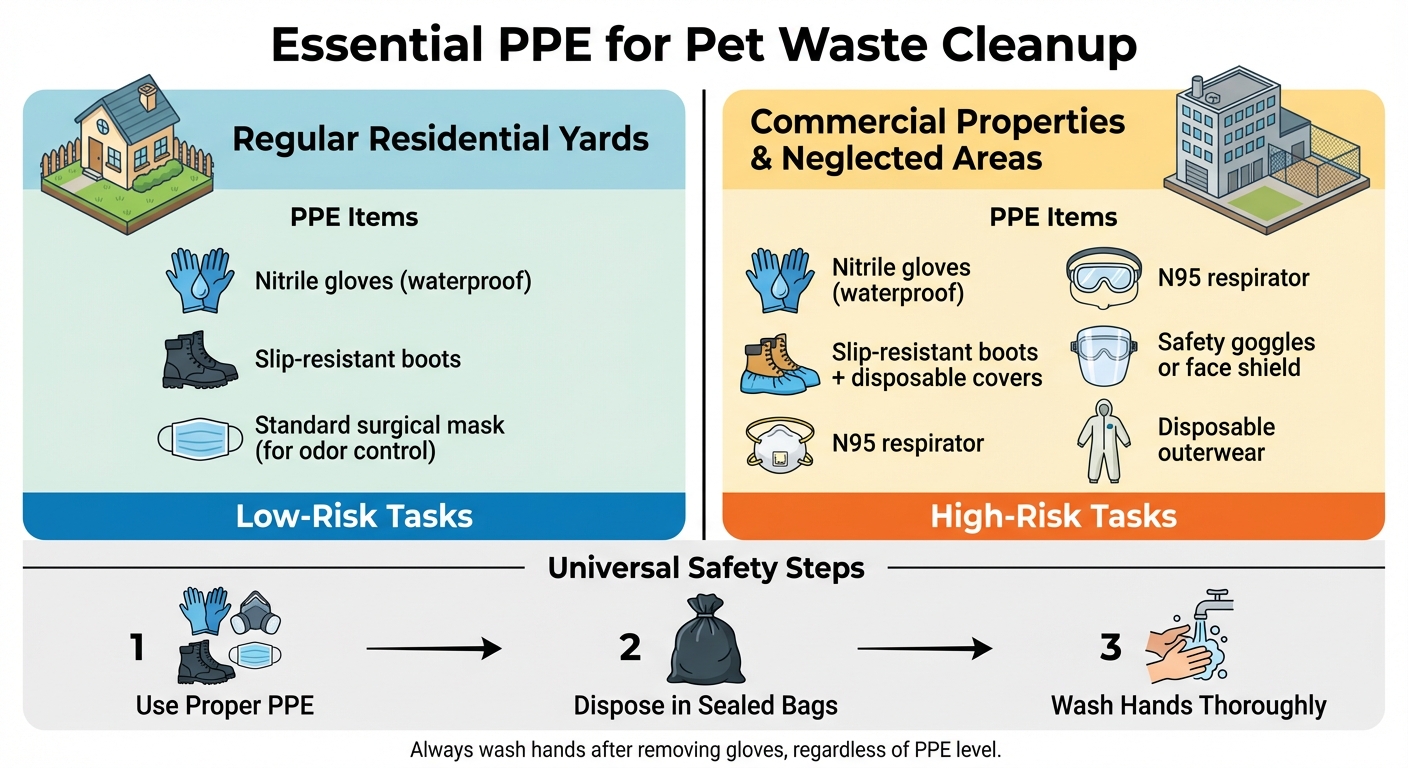
Essential PPE for Pet Waste Cleanup: Protection Guide by Risk Level
Cleaning up pet waste isn’t just about keeping spaces tidy – it’s about protecting yourself from potential hazards. From harmful bacteria to physical risks, using the right personal protective equipment (PPE) is essential for staying safe. The type of PPE you need can vary depending on the situation, whether it’s a small backyard or a large commercial kennel. Here’s a breakdown of the key PPE components for different cleanup scenarios.
Gloves: Your First Line of Defense
Waterproof gloves are crucial for shielding your hands from harmful pathogens found in pet waste. Nitrile gloves are often the best choice – they’re more resistant to punctures than latex gloves and are less likely to cause allergic reactions. These gloves act as an effective barrier against bacteria, parasites, and other contaminants.
However, even the best gloves aren’t foolproof. Micro-tears can occur, so it’s important to wash your hands thoroughly after removing them, no matter what.
Protecting Your Feet and Eyes
For areas with high contamination, waterproof, slip-resistant boots paired with disposable covers are a must. They protect your feet from direct contact with waste and prevent slipping on wet surfaces.
When dealing with potential splashes – like when using high-pressure washers or chemical cleaners – safety goggles or a combination of goggles and a face shield provide vital eye protection. These prevent harmful substances from coming into contact with your eyes.
Respiratory Protection for Tough Jobs
If you’re dealing with strong odors or light cleaning, a standard surgical mask is usually sufficient. But for high-risk tasks, like cleaning neglected areas or disturbing dried feces, it’s better to use an N95 respirator. This provides a higher level of filtration, keeping harmful particles out of your lungs.
Matching PPE to the Task
The level of PPE you’ll need depends on the job. For a small residential yard that’s cleaned regularly, basic gear like nitrile gloves and waterproof boots will often suffice. On the other hand, commercial properties with multiple dogs or neglected spaces require a more comprehensive setup: gloves, boots with disposable covers, goggles, and an N95 respirator.
Once the job is done, make sure to dispose of all single-use PPE in sealed trash bags. And no matter how much protection you’ve worn, always wash your hands thoroughly afterward. Your safety starts and ends with proper hygiene.
sbb-itb-d8cd9f4
How DMV Poop Patrol Implements PPE Standards
Professional-Grade Safety Protocols
DMV Poop Patrol follows strict safety and sanitation procedures across Maryland, DC, and Virginia. Our technicians use moisture-proof gloves and closed-toe shoes – both essential in animal care. After each cleanup, all equipment is thoroughly disinfected, and PPE is removed in a step-by-step, hygienic manner. Gloves are the last item to be removed and are immediately discarded, followed by proper handwashing. This carefully managed process reflects established safety standards, ensuring a professional approach for both residential and commercial cleanups.
Minimizing Risks for Clients and Staff
Preventing the spread of germs is a top priority. By disinfecting tools and footwear between visits, DMV Poop Patrol ensures that no harmful pathogens are carried from one yard to another. This practice safeguards everyone, from kids playing outside to gardeners and even visiting pets. For particularly challenging jobs, like cleaning heavily soiled dog runs, our team adds extra layers of protection, such as disposable outerwear and shoe covers, to keep everyone safe.
Maintaining Clean and Odor-Free Spaces
Using proper PPE doesn’t just protect our team – it also enhances the quality of service we provide. With the right gear, technicians can confidently handle tasks in all areas, including flower beds, side yards, and dog runs. This allows us to safely apply deodorizing treatments and manage waste effectively, no matter the weather. The result? A yard that stays fresh, welcoming, and safe throughout the year.
Conclusion
Using proper personal protective equipment (PPE) – like moisture-resistant gloves, rubber boots, protective goggles, and respirators – paired with thorough handwashing is critical for reducing exposure to biological hazards. While PPE provides a physical barrier, it’s not a substitute for hygiene. Washing hands properly after removing gloves is key to eliminating any lingering contamination. Together, these practices form the foundation of effective safety measures.
DMV Poop Patrol takes these safety principles seriously. The company uses professional-grade PPE and adheres to strict sanitation protocols to safeguard both its technicians and the communities it serves across Maryland, DC, and Virginia. By thoroughly disinfecting equipment between visits and maintaining high safety standards, they help ensure that children can play freely, gardeners can work without concern, and neighborhoods stay clean and fresh.
Consistently using the right PPE not only prevents the spread of contaminants but also protects local environments, including playgrounds and gardens. Whether you’re relying on professional services or tackling cleanup yourself, prioritizing PPE and hygiene is essential. These efforts contribute to cleaner, safer outdoor spaces and underscore a shared commitment to community well-being.
FAQs
Why is it important to use PPE when cleaning up pet waste?
Using personal protective equipment (PPE) when cleaning up pet waste is crucial to shield yourself from bacteria, parasites, and diseases that can jump from animals to humans. Pet waste often harbors pathogens like E. coli and roundworms, which can pose serious health hazards if you’re not careful.
Gear like gloves and masks serves as a protective barrier, keeping you from coming into direct contact with waste or inhaling harmful particles. Beyond protecting your health, using PPE helps maintain a cleaner, safer environment for everyone around you. Taking these precautions also aligns with health and sanitation standards, ensuring you’re doing things the right way.
What personal protective equipment (PPE) should you use for cleaning up pet waste?
Using the proper personal protective equipment (PPE) is crucial for safely and hygienically cleaning up pet waste. Here’s what you should consider:
- Disposable gloves: These keep your hands protected from bacteria and parasites, avoiding direct contact.
- Face masks: They help reduce exposure to harmful particles and unpleasant odors during cleanup.
- Protective eyewear: Shields your eyes from unexpected splashes or debris.
By using these items, you can reduce health risks and make the cleanup process safer and more hygienic.
What are the environmental impacts of not properly disposing of pet waste?
Pet waste left unattended can have serious consequences for the environment. When not disposed of correctly, it can release harmful bacteria and parasites into the soil and nearby water sources, potentially polluting local waterways. On top of that, the nutrients found in pet waste can trigger algae blooms in water bodies, reducing oxygen levels and threatening aquatic life.
Cleaning up after pets and disposing of their waste properly is a simple but crucial step toward safeguarding the environment and promoting healthier, safer communities.

