

Pet waste isn’t just unpleasant – it can spread serious diseases from animals to humans. These illnesses, called zoonotic diseases, are caused by bacteria, parasites, and viruses found in pet feces. Common pathogens include Salmonella, Giardia, and Toxoplasma, which can lead to infections affecting the stomach, eyes, or even the brain.
Key risks include:
- Direct contact: Handling waste improperly or touching contaminated fur.
- Environmental contamination: Rain spreads pathogens from waste into soil and water.
- High-risk groups: Children, pregnant women, and those with weak immune systems are most vulnerable.
To reduce these risks:
- Always pick up pet waste, seal it in bags, and dispose of it in trash bins.
- Wash hands thoroughly after cleanup.
- Consider professional waste removal services for consistent sanitation.
Managing pet waste responsibly protects your health, your community, and your environment.
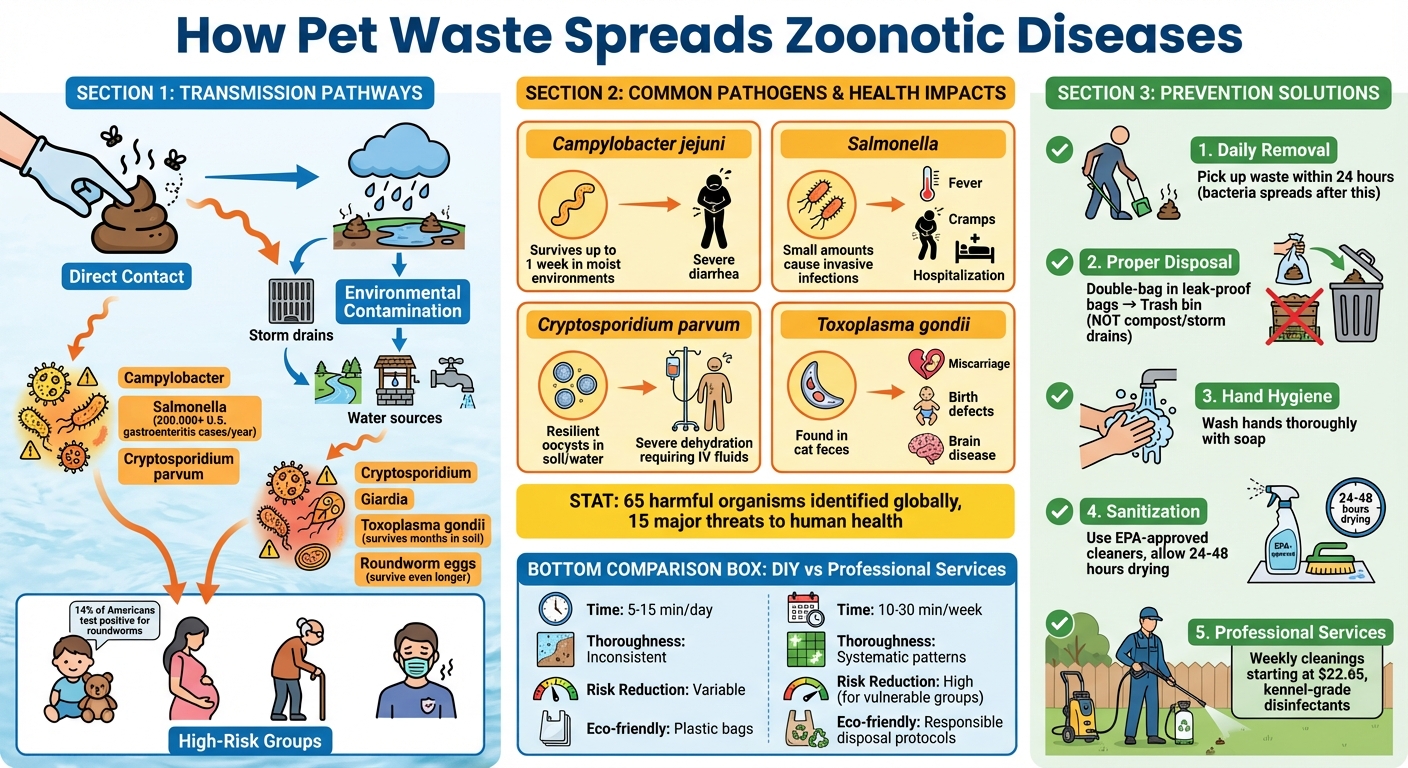
How Pet Waste Spreads Zoonotic Diseases: Transmission Pathways and Prevention
How Pet Waste Spreads Zoonotic Diseases
Direct Contact with Contaminated Waste
Handling pet waste without proper precautions – like picking it up bare-handed, touching contaminated fur or paws, or skipping handwashing – can expose people to harmful pathogens. For instance, Campylobacter and Salmonella are responsible for over 200,000 cases of gastroenteritis in the U.S. each year.
Even pets that appear clean can carry traces of feces on their fur or paws after defecating. When humans pet their animals or allow them to lick their faces, they risk exposure to pathogens like Cryptosporidium parvum. This is especially concerning for children and individuals with weakened immune systems. Surprisingly, even the cleanest pets can unknowingly spread disease if they’ve come into contact with residual fecal matter. However, the risks don’t stop at direct contact – these pathogens also find their way into our surroundings.
Indirect Transmission Through Contaminated Environments
The danger of pet waste extends beyond direct touch. When waste is left unattended, it contaminates the environment, affecting soil, grass, sand, and even water sources. Rainfall can carry pathogens from feces into storm drains, groundwater, and recreational water bodies, spreading organisms like Cryptosporidium and Giardia.
This contamination creates risks for everyday activities. Children playing barefoot, gardeners working in soil, or swimmers in polluted water may unknowingly come into contact with harmful microbes. For example, Toxoplasma gondii oocysts from cat feces can survive in soil for months, while roundworm eggs can remain viable even longer. Areas with uncollected pet waste essentially become long-term sources of infection. Studies in urban settings, such as Washington, DC, have documented the spread of Toxocara canis and Cryptosporidium in contaminated parks and yards.
Common Pathogens Found in Pet Waste
Pet waste is a breeding ground for several dangerous pathogens, including Campylobacter jejuni, Salmonella, Cryptosporidium parvum, and Toxoplasma gondii. Each poses unique risks:
- Campylobacter jejuni can survive in moist environments for up to a week and often causes severe diarrhea.
- Even small amounts of Salmonella can lead to invasive infections.
- Cryptosporidium parvum produces resilient oocysts that persist in soil and water, posing serious hazards to vulnerable groups.
- Toxoplasma gondii, found in cat feces, sheds oocysts that remain in the environment and are particularly dangerous for pregnant women and immunocompromised individuals.
A global study identified 65 potentially harmful organisms in animal feces, with 15 considered major threats to human health through environmental exposure. These findings highlight the critical need for responsible pet waste management to protect public health.
The Health Risks of Zoonotic Diseases
Diseases Caused by Pet Waste Exposure
Pet waste can harbor harmful pathogens that lead to illnesses ranging from mild discomfort to severe health issues. For example, Campylobacteriosis and salmonellosis are common infections that often result in watery diarrhea, fever, abdominal cramps, nausea, and vomiting. In some cases, these symptoms can escalate, requiring hospitalization due to severe dehydration.
Another concerning illness, cryptosporidiosis, can cause dehydration so severe that patients may need IV fluids. Meanwhile, toxocariasis has been linked to severe eye inflammation and, in extreme cases, blindness. Toxoplasmosis, while typically mild in healthy adults, poses a much greater threat to vulnerable groups. It can lead to miscarriage, birth defects, or even brain disease in certain populations.
The consequences of these illnesses aren’t limited to their immediate symptoms. For instance, children exposed to these pathogens might experience long-term health issues like growth faltering or environmental enteric dysfunction. Similarly, individuals with weakened immune systems may face life-threatening complications from infections that others might recover from more easily. Understanding these risks highlights the importance of identifying those most affected by exposure.
Who Is Most at Risk
Some groups are more vulnerable to the health risks associated with pet waste, emphasizing the need for targeted prevention strategies.
Young children are at heightened risk due to their tendency to engage in hand-to-mouth behavior and play in contaminated areas like soil or sandboxes. A CDC study revealed that 14% of Americans tested positive for roundworms (Toxocara). Between 1996 and 2017, U.S. outbreaks tied to pet-related pathogens included 1,461 cases (15%) involving children under 5 years old. Among these, 1,752 individuals (18%) required hospitalization, and 33 deaths were reported.
Pregnant women face unique dangers from exposure to Toxoplasma gondii, especially when handling cat litter. Infection during pregnancy can cause congenital toxoplasmosis, miscarriage, or severe birth defects in the unborn child.
Elderly individuals and those with weakened immune systems – such as people with HIV/AIDS, cancer patients undergoing chemotherapy, or organ transplant recipients – are particularly susceptible to severe infections from pathogens like Cryptosporidium and Salmonella. For these individuals, even typically manageable infections can lead to life-threatening complications, including brain and eye diseases.
These risks highlight the importance of maintaining clean environments through consistent and professional pet waste management to reduce exposure and safeguard public health.
Not cleaning up after your dog You may be spreading disease.
sbb-itb-d8cd9f4
Solutions: Safe Pet Waste Disposal Practices
To address the health risks posed by pet waste, adopting safe disposal methods is essential.
Proper Cleanup and Disposal Methods
Removing pet waste daily is crucial to prevent the growth of harmful pathogens. For instance, bacteria like Campylobacter can survive in moist feces for up to a week, meaning even a 24-hour delay can allow dangerous bacteria to spread in your yard. Use a pooper scooper or thick gloves to collect the waste, then double-bag it using leak-proof bags to securely contain bacteria such as Salmonella and protozoa like Cryptosporidium. Dispose of the sealed bags in your curbside trash bin – avoid compost piles or storm drains, as these can spread pathogens into water supplies and gardens.
After cleanup, disinfect any tools or footwear used, and wash your hands thoroughly with soap and water. These actions break the fecal-oral transmission cycle that can spread diseases to children playing outdoors or adults working in gardens. For a stress-free solution, consider hiring professional pet waste removal services.
Professional Pet Waste Removal Services
Professional services take the hassle out of maintaining a clean yard while ensuring thorough and consistent waste removal. For example, DMV Poop Patrol provides eco-friendly yard cleaning and waste station servicing throughout Maryland, DC, and Virginia. Their team handles waste removal from all parts of your property, including front yards, backyards, side yards, and flower beds. Pricing starts at $22.65 per weekly cleaning, offering a convenient way to maintain hygiene year-round, even during challenging weather conditions.
"We’re dedicated to protecting your pets and family with thorough sanitation practices and eco-friendly waste disposal. Clean yards, happy homes – that’s our mission!" – DMV Poop Patrol
These services use specialized tools to ensure complete waste removal and apply kennel-grade disinfectants to eliminate resilient pathogens like Cryptosporidium, which might be missed during irregular cleanups. For commercial properties, DMV Poop Patrol also installs and maintains pet waste stations, helping businesses, parks, and HOAs keep shared spaces clean and pathogen-free.
Sanitization and Odor Control
Once waste is removed, treat the area with EPA-approved enzymatic cleaners or accelerated hydrogen peroxide to destroy any lingering pathogens. Allow the treated surfaces to dry for 24 to 48 hours, as sunlight can help deactivate helminth eggs that may cause toxocariasis.
If odors persist, sprinkle lime or baking soda on the affected areas or use zeolite-based absorbers to neutralize smells. Regularly mowing the lawn exposes the soil to UV rays, which kill pathogens, while improving drainage prevents the damp conditions that allow bacteria like Campylobacter to thrive. These additional measures help protect public health and reduce the risks associated with pet waste.
Comparison: DIY Cleanup vs. Professional Services
Key Factors to Consider
When it comes to keeping your yard clean and preventing disease, understanding the differences between DIY cleanup and professional services is important. DIY pet waste cleanup typically takes about 5–15 minutes a day to locate, scoop, bag, and dispose of waste. However, many pet owners underestimate this daily commitment, which can lead to waste piling up and an increased risk of pathogens like Campylobacter spreading. Professional services, such as DMV Poop Patrol, offer a more convenient alternative with scheduled visits once or twice a week, lasting 10–30 minutes per session. This can be a game-changer for busy families, older adults, or anyone with limited mobility.
Cost is another factor to weigh. While DIY cleanup might seem free, the reality is you’ll still need to buy bags, scoopers, gloves, and disinfectants. On the other hand, professional services charge a flat monthly fee, which varies depending on yard size and visit frequency. This predictable expense not only covers the convenience but also ensures a more thorough and safer waste removal process.
Speaking of thoroughness, professional teams take it up a notch. They follow systematic patterns to locate waste, even in hidden spots, and use specialized tools, double-bagging techniques, and sealed containers to minimize contamination. Many also rely on kennel-grade disinfectants to tackle lingering pathogens. In contrast, DIY efforts can be inconsistent, often skipping gloves or proper hygiene practices. This inconsistency increases the risk of leaving behind harmful bacteria, which is especially concerning for households with young children, pregnant individuals, older adults, or anyone with a weakened immune system.
Eco-conscious practices are another area where professional services shine. DIY cleanup often involves using plastic grocery bags, which contribute to landfill waste and potential environmental harm. Professional services, however, follow responsible disposal protocols that aim to protect local waterways. By promptly removing waste, they help prevent rainwater from washing harmful pathogens into storm drains, streams, and lakes.
For the best results, a mix of DIY efforts and professional services is ideal. Professional teams provide regular maintenance and thorough sanitation, but fresh waste can still accumulate between their visits. Combining their services with timely DIY spot cleanups – especially after an illness or in high-traffic areas – offers the strongest defense against disease risks. For households with multiple dogs, large yards, or shared community spaces, professional services not only make life easier but also play a role in reducing environmental contamination on a larger scale.
Conclusion: Protecting Health Through Responsible Pet Ownership
Pet waste isn’t just unpleasant – it can carry harmful bacteria like Campylobacter and Salmonella, along with parasites such as roundworms and Giardia, all of which can cause serious illnesses. These pathogens spread through the fecal–oral route, often when contaminated soil, water, or surfaces come into contact with hands, food, or mouths. According to the CDC, around 14% of Americans test positive for roundworms, highlighting the widespread nature of this issue. Children, the elderly, pregnant individuals, and those with weakened immune systems are particularly vulnerable.
You can break this cycle with simple, consistent habits. Always pick up after your pet, securely seal waste in a bag, dispose of it properly, and wash your hands immediately. Regular vet visits, including deworming and parasite prevention, are also vital to minimizing the risk of your pet spreading these harmful organisms.
For those who need extra help, professional services can ensure a consistently clean and safe environment. In busy households or on larger properties, professional waste removal services can handle regular cleanups and help prevent the spread of pathogens. For example, DMV Poop Patrol serves Maryland, DC, and Virginia by providing yard cleaning, pet waste station maintenance, and eco-friendly sanitation to keep yards, dog parks, and shared spaces safe for both people and pets.
Each pet owner’s efforts contribute to a healthier community. By committing to clean up after your pet, sticking to a regular routine, and considering professional services when needed, you can protect your family, neighbors, and the environment. Keep waste bags readily available, clean up frequently, and work with property managers to ensure there are enough pet waste stations. Combining personal responsibility with professional support creates a safer, cleaner community – a message that’s been emphasized throughout this article. Small, consistent actions make a big difference in promoting responsible pet ownership and safeguarding public health.
FAQs
What diseases can be spread through pet waste?
Pet waste isn’t just an unpleasant mess – it can carry pathogens that cause diseases in humans, known as zoonotic diseases. Some of the most common include toxocariasis (from roundworms), giardiasis, cryptosporidiosis, salmonellosis, and campylobacteriosis. These illnesses can trigger symptoms like diarrhea, fever, and abdominal pain. Children, pregnant individuals, and people with weakened immune systems are especially vulnerable.
To minimize the risk of spreading these diseases, it’s crucial to dispose of pet waste properly. Regular cleanup and sanitizing the affected areas go a long way in maintaining a safe and healthy environment.
What steps can I take to protect my family from illnesses caused by pet waste?
Keeping your family safe from health risks associated with pet waste starts with prompt and responsible cleanup. Always dispose of waste properly and consider using environmentally friendly methods. Regularly cleaning and sanitizing the areas where your pets relieve themselves is crucial to reduce harmful bacteria, parasites, and those unpleasant odors that no one wants lingering around.
If managing this on your own feels like too much, professional pet waste removal services can be a game-changer. They handle disposal, deep cleaning, and sanitation, helping you maintain a safe, clean environment while giving you peace of mind about your loved ones’ health.
Who is most at risk from diseases spread by pet waste?
Certain people face a higher risk of health issues from pet waste due to either increased exposure or weaker immune defenses. Kids, for instance, are more at risk since they often play outside and might touch contaminated soil or surfaces. Similarly, people with weakened immune systems, like those undergoing certain medical treatments or living with chronic illnesses, are more prone to infections. Even other pets can be affected if they come into contact with waste left by animals.
To minimize these risks, it’s crucial to dispose of pet waste properly and practice good hygiene. Regularly cleaning up and making sure waste is discarded the right way can help shield your family, pets, and community from harmful bacteria and parasites.

